

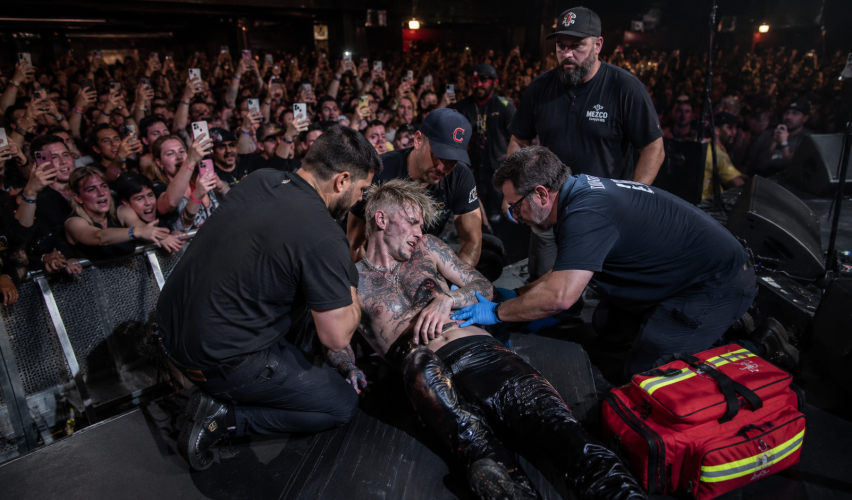
Machine Gun Kelly, also known as MGK, recently suffered a back injury after a stage dive during a club appearance in Middletown, Connecticut. The incident became a trending celebrity injury story because it highlighted the physical risks artists face when live performances move beyond the stage and into the crowd.
What Happened During The Stage Dive
According to CT Insider, MGK injured his back after a stage dive at Mezzo Grille in Middletown on June 6, 2026. The report stated that he later shared online that he was having trouble standing and moving because of the pain.
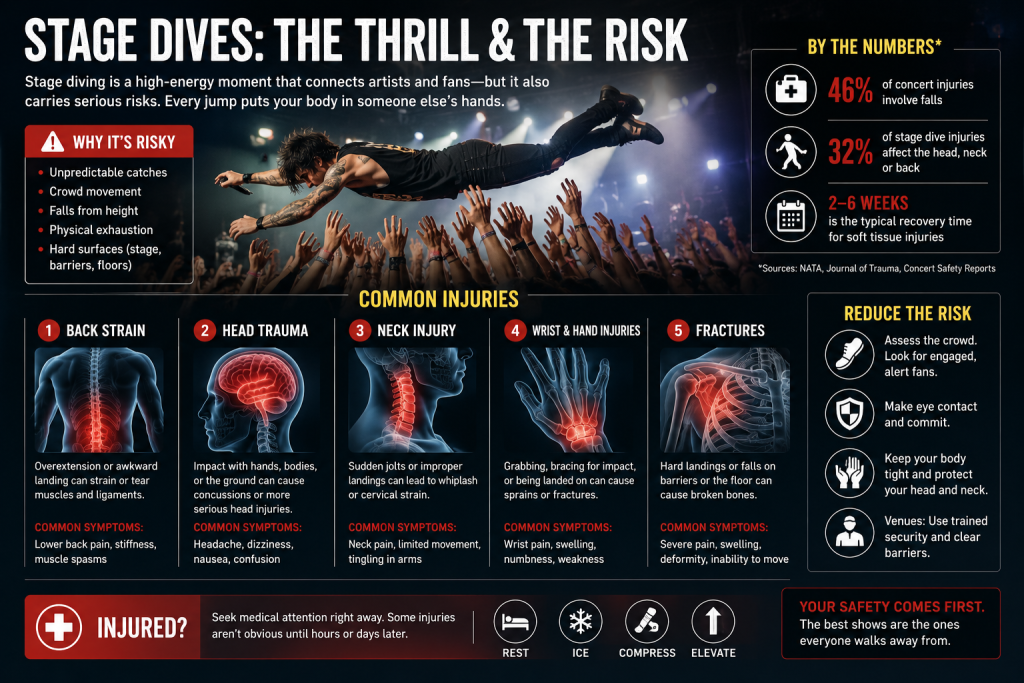
Stage dives are often seen as spontaneous fan moments, but they can create serious risks for performers, venue staff, and concertgoers. A fall, awkward landing, or missed catch can cause back injuries, head trauma, fractures, or crowd-related injuries.
Why Stage Dives Can Be Dangerous
Live performances are unpredictable. Bright lights, loud sound, crowded rooms, and limited space can increase the chance of injury. When an artist jumps from an elevated platform, the outcome depends on crowd reaction, security positioning, and the performer’s body control.
The National Safety Council provides general injury prevention resources that show how falls and impact injuries remain major safety concerns in public settings.
Common Back Injuries After A Fall
Back injuries after a stage dive may include muscle strain, spinal compression, bruising, disc irritation, or nerve-related pain. Even if the performer can continue moving, pain can worsen after adrenaline fades.
The Mayo Clinic explains that back pain can develop from muscle strain, ligament injury, or spine-related conditions. Performers who continue touring after an injury may need careful medical monitoring.
How This Connects To Celebrity Performance Risks
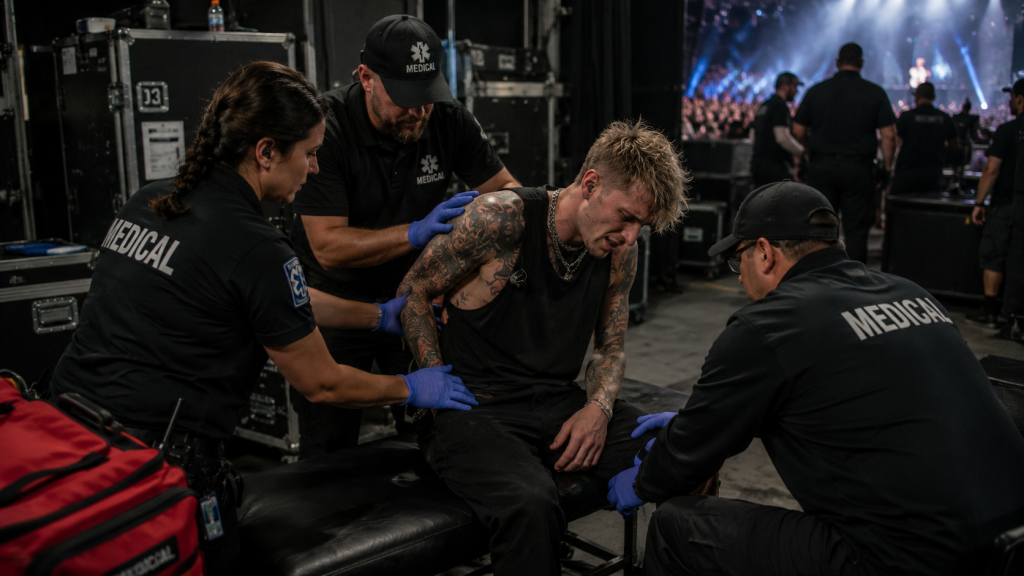
MGK’s injury fits a larger pattern of celebrities facing physical risks during live events. Celeb Injuries has covered similar concerns in its Celebrity Injury section and its article on celebrity tour injuries in 2026.
These incidents show that performers are not only entertainers. They are also workers in physically demanding environments where fatigue, crowd energy, and production choices can affect safety.
Venue Safety And Crowd Control
Venues usually rely on security teams, crowd barriers, stage layout planning, and emergency response procedures. However, smaller clubs may have tighter spaces and less separation between artists and fans.
The Occupational Safety and Health Administration provides workplace safety standards that can help frame broader safety concerns for entertainment venues and workers.
Legal And Insurance Issues After A Performance Injury
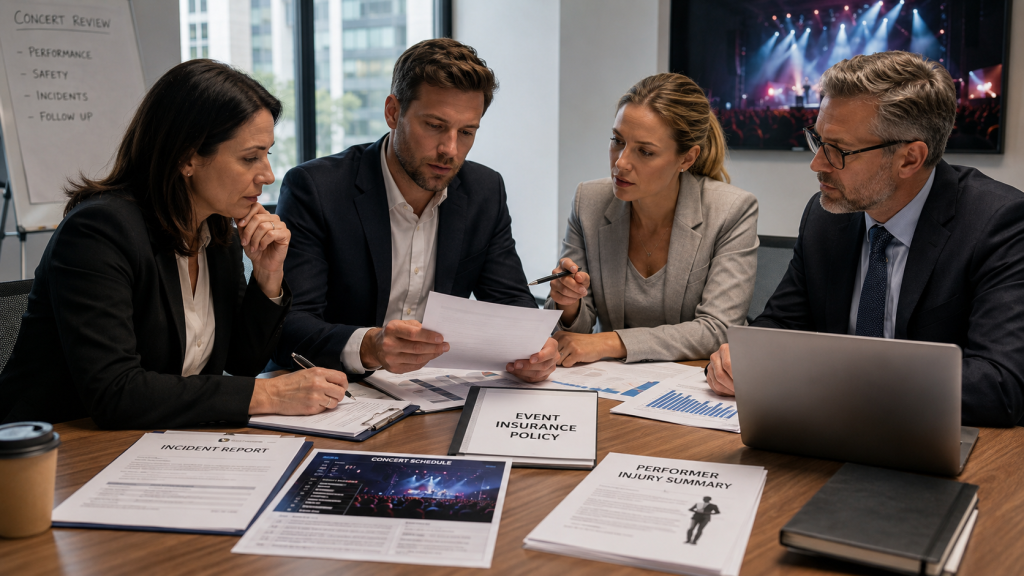
When a celebrity is injured during a live event, several legal and insurance questions may arise. These can include venue liability, performer assumption of risk, security planning, production safety, and event insurance coverage.
Readers can explore Celeb Injuries’ related article on the role of insurance in high-profile injury cases. Event coverage resources from Insureon also explain why public events often carry insurance protection.
Final Thoughts
MGK’s back injury after a stage dive shows how quickly a high-energy performance can become a medical concern. While crowd interaction may create memorable moments, it also carries real risks for artists, fans, and venue teams.
As live music continues to grow in scale and intensity, performer safety, crowd control, and emergency planning remain essential parts of every event.