

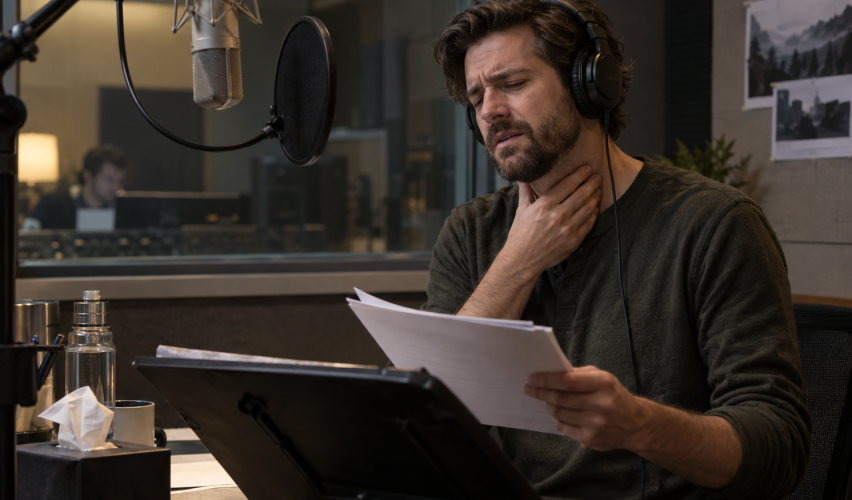
Seth Green has revealed that years of intense voice acting eventually caused a serious vocal injury, offering a rare look at the physical demands placed on actors whose primary performance tool is their voice.
The 52-year-old actor, known for projects including Family Guy, Robot Chicken, and numerous animated and video game roles, recently explained that he pushed through a particularly demanding two-year period without allowing his voice enough time to recover.
According to People, Green said the accumulated vocal trauma ultimately required medical treatment and significantly affected his vocal range.
What Happened To Seth Green’s Voice?
Green discussed the injury during an appearance on The McBride Rewind podcast. He described a period in which he worked continuously on several voice-heavy productions, moving from project to project with very little recovery time.
His workload included animated television programs as well as extensive recording for Call of Duty. Green explained that some video game sessions were especially demanding because they required repeated yelling, grunting, and other intense vocalizations for hours at a time.
The issue was not a single dramatic accident. Instead, the damage developed through repeated vocal stress.
That makes Green’s story especially relevant to professional voice users, whose injuries can develop gradually rather than through one identifiable incident.
Why Voice Acting Can Be Physically Demanding
Voice acting may take place inside a quiet recording studio, but the work can still be physically strenuous.
An actor may need to scream, whisper, growl, cry, project loudly, imitate unusual character voices, or repeat emotionally intense lines dozens of times. Video games can add another challenge because actors often record combat sounds, screams, exertion noises, and reactions separately.
The National Institute on Deafness and Other Communication Disorders explains that people who rely heavily on their voices for work are at greater risk of developing voice problems.
Vocal misuse and overuse are recognized causes of voice disorders, particularly when the voice is repeatedly pushed while tired or irritated.

What Green Said Doctors Found
Green said doctors identified an unusual condition that he described as chondroid metaplasia. Because this specific diagnosis comes from Green’s own account, it is important not to generalize his case to other voice actors or people experiencing hoarseness.
He explained that repeated trauma had changed tissue in his vocal mechanism and that doctors treated the affected area using surgical techniques involving lasers and scalpels.
Green also said his highest vocal range has not completely returned.
That lasting change shows why professional voice injuries can have career consequences even when someone remains able to speak and work.
Common Signs Of Voice Injury
Not every tired or raspy voice indicates a serious injury. However, persistent changes should not automatically be ignored.
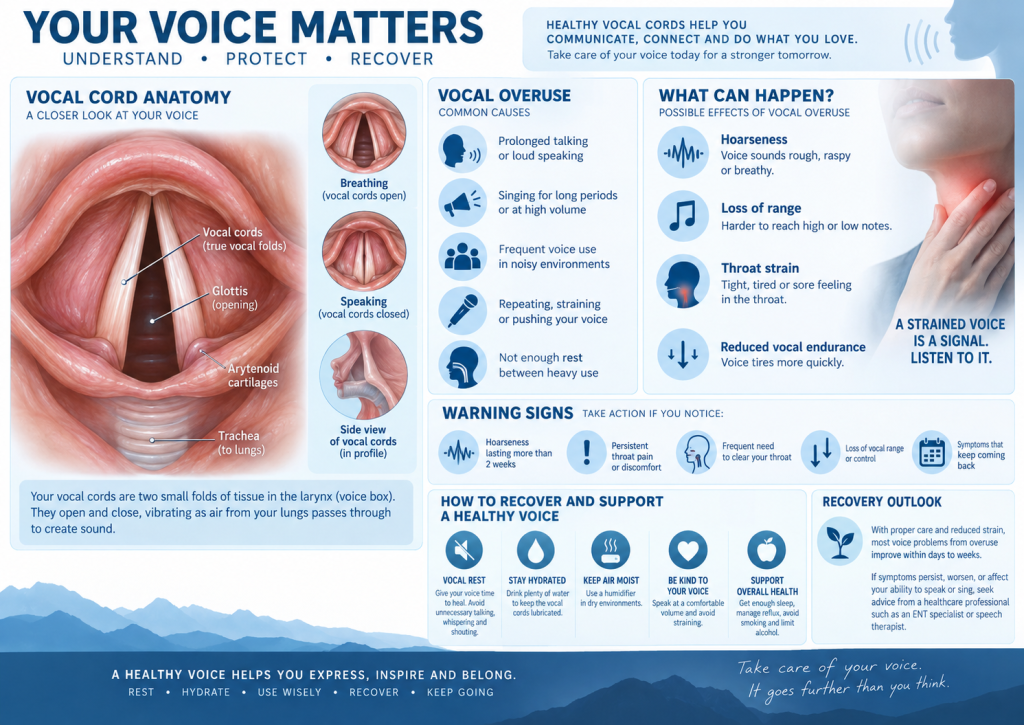
The NIDCD lists warning signs that can include hoarseness, loss of high notes, a suddenly deeper voice, throat pain, increased effort when speaking, and frequent throat clearing.
The Cleveland Clinic also notes that repeated vocal overuse can contribute to problems such as nodules, polyps, and other vocal-fold lesions. Symptoms may include vocal fatigue, reduced range, breathiness, hoarseness, and pain.
Why Vocal Rest Matters
One of Green’s biggest lessons from the experience was the importance of allowing time between demanding recording sessions.
The voice depends on delicate tissues repeatedly vibrating at high speed. When those tissues are irritated or fatigued, continuing to yell or speak aggressively can create additional strain.
The American Speech-Language-Hearing Association recommends resting the voice when it feels tired and avoiding unnecessary shouting or speaking over loud noise.
ASHA also advises professional voice users to seek evaluation when persistent hoarseness or vocal fatigue does not improve.
Professional Voice Users Have Different Demands
Actors, singers, broadcasters, teachers, coaches, and other professionals may depend on their voices for income. Losing part of their vocal range can therefore affect much more than everyday communication.
The ASHA Voice Disorders Practice Portal notes that professional voice rehabilitation may require specialized care from an otolaryngologist, speech-language pathologist, voice trainer, or other professionals.
This is similar to physical rehabilitation after a sports or stunt injury: treatment must consider the specific demands of the person’s work.
How Voice Actors Can Reduce Vocal Strain
There is no single strategy that can prevent every voice injury, but several habits may reduce unnecessary stress.
The NIDCD recommends staying hydrated, getting enough rest, using appropriate breathing techniques, avoiding extremes of the vocal range when possible, and taking regular “vocal naps” during the day.
Actors can also benefit from microphones and recording techniques that reduce the need to force volume. Production schedules can be structured so that the most aggressive vocal material is not recorded continuously for hours without adequate breaks.
Those considerations are particularly relevant to entertainment workplaces, where deadlines can encourage performers to push through discomfort.
When Medical Evaluation Becomes Important
A voice that becomes temporarily hoarse after heavy use may recover with rest. Persistent changes, however, may require professional evaluation.
Johns Hopkins Medicine explains that treatment for vocal-cord disorders can include voice rest, changing the behavior that caused the problem, speech-language therapy, medication, or surgery depending on the condition.
A specialist may use an examination of the larynx and vocal folds to determine whether structural damage or another medical issue is present.
Trying to diagnose a voice injury from sound alone is unreliable, especially when the person is a professional actor capable of changing pitch and tone intentionally.
Green’s Story Highlights Occupational Injury Risks
Green’s experience broadens the way entertainment injuries are often discussed. Film-set injuries and concert accidents tend to involve visible events such as falls, collisions, or stunt failures. Vocal injuries can be less obvious but still directly connected to the demands of professional work.
Celeb Injuries previously explored similar workload concerns in Rihanna Stage Exhaustion and Tour Burnout Concerns in 2026.
The issue also connects with broader entertainment safety concerns discussed in The Hidden Dangers of Live Performances.
Why Production Scheduling Matters
Green specifically linked his injury to moving between demanding projects without enough recovery time. That raises a broader occupational question about how recording schedules are structured.
Voice directors, producers, actors, and studios may need to consider how much high-intensity material can reasonably be recorded during one session.
A performer who has spent several hours screaming for a video game may not be ready for another demanding voice role the following morning.
Production planning can therefore become part of injury prevention, just as rehearsal limits, stunt coordination, and rest periods are used elsewhere in entertainment.
The Difference Between Singers And Voice Actors
Singers are often associated with vocal injuries because they routinely perform demanding material, but voice actors face a different type of workload.
A voice actor may suddenly switch among characters, accents, ages, emotional states, screams, whispers, or nonverbal sounds during the same recording day.
Some sessions also require repeating the same intense reaction many times so a production team can capture multiple versions.
That repetition can create considerable strain if recovery and technique are not managed appropriately.
What Green’s Recovery Looks Like
Green has continued working, but he has said the experience changed the way he treats his voice. He now places more emphasis on self-care and recovery between demanding sessions.
His disclosure does not mean every voice actor will suffer the same injury. Instead, it provides a useful example of what can happen when high-intensity vocal work accumulates over a long period.
Green’s inability to fully regain his highest register also illustrates why early attention to persistent symptoms may matter for people whose livelihoods depend on vocal performance.
Final Thoughts
Seth Green’s vocal cord injury reveals an often-overlooked side of entertainment safety. Voice acting may not involve dangerous stunts or crowded stages, but repeated yelling, character work, and long recording sessions can place significant stress on the vocal system.
His experience reinforces the importance of recovery time, hydration, professional technique, and medical evaluation when symptoms persist. For studios and performers alike, protecting the voice is not simply a comfort issue — it can be essential to sustaining a career.