

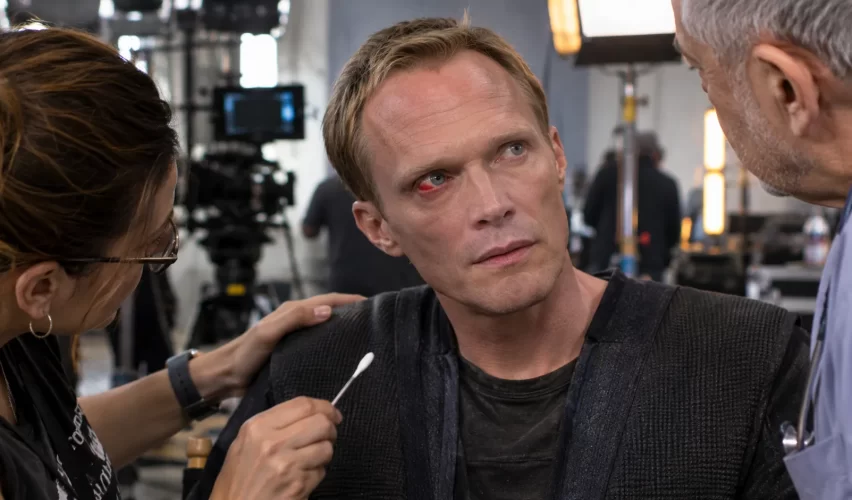
Paul Bettany has revealed an unusual eye injury from filming VisionQuest, the Marvel series that brings him back as Vision. During an appearance on Jimmy Kimmel Live! on October 29, 2026, the actor said he burst approximately 10 blood vessels in one eye while acting out an intense scene. The eye remained noticeably red for around two weeks.
The story attracted attention because the injury reportedly occurred without a fall, collision, or dangerous stunt. Bettany attributed it to the effort he put into portraying a character experiencing the effects of a fictional device. His account also provides an opportunity to explain why a dramatic-looking red eye does not necessarily mean permanent damage, and when eye symptoms should receive medical attention.
What Happened to Paul Bettany While Filming VisionQuest?
In People’s report on Paul Bettany’s eye injury, the 55-year-old actor described pretending that a device attached to his character’s head was affecting his brain. He said he was pushing his physical performance so hard that multiple blood vessels in an eye ruptured.
The injury became public when Bettany discussed it on the October 29 episode of Jimmy Kimmel Live!. A photograph shown during the interview depicted a strikingly bloodshot eye. Bettany joked that his unusually forceful acting had provided a lesson in restraint.
He also said the discoloration lasted around two weeks and joked about how much work production might have needed to remove the redness from footage. That comment should not be treated as a verified accounting of the show’s visual-effects costs.
Why Did His Eye Turn So Red?
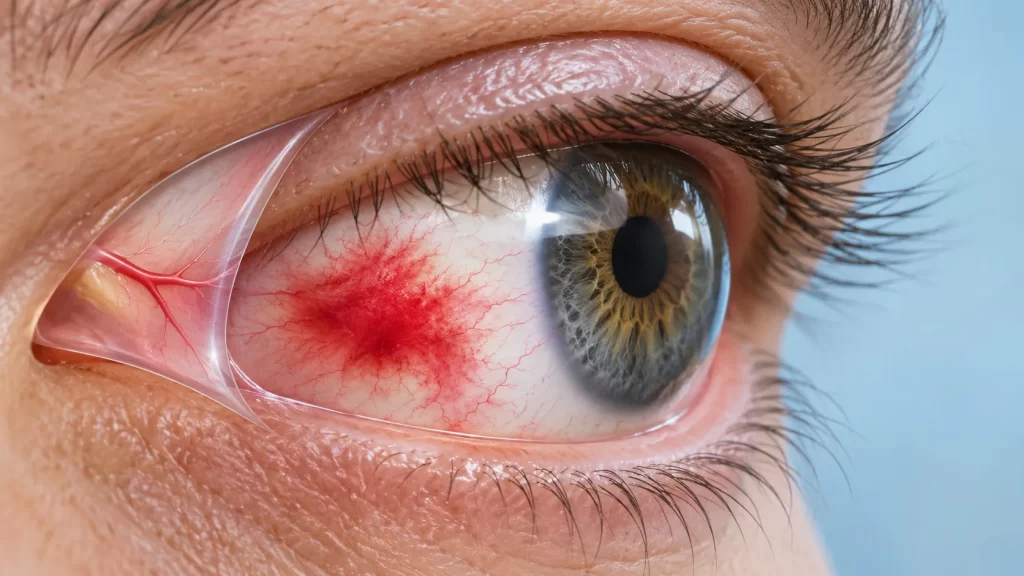
One possible medical explanation for a bright-red patch on the white of the eye is a subconjunctival hemorrhage. This occurs when a small blood vessel beneath the conjunctiva, the clear membrane covering the white portion of the eye, breaks and releases blood.
According to the American Academy of Ophthalmology, this bleeding may look dramatic because the leaked blood remains visible beneath the thin transparent tissue. The appearance can resemble a bruise, although it occurs on the eye’s surface rather than the skin.
Reports have described Bettany’s injury as broken blood vessels in the eye. However, he has not publicly released a clinical examination confirming its precise diagnosis, so this article does not assume an ophthalmologist identified a particular condition.
Can Physical Straining Break Blood Vessels in the Eye?
Yes. Small vessels around the conjunctiva can sometimes rupture after a temporary increase in pressure caused by coughing, sneezing, vomiting, heavy exertion, or straining. Minor trauma and rubbing the eye can also produce a similar result.
Mayo Clinic’s overview of subconjunctival hemorrhage explains that even an ordinary forceful sneeze may be associated with a burst vessel. The mechanism helps put Bettany’s account into context: an eye may become visibly red during strenuous activity even when the person has not struck it against an object.
Exactly which physical actions caused Bettany’s injury has not been independently established. His statement describes the experience as he remembers it rather than a medical finding about the precise mechanism.
How Is a Subconjunctival Hemorrhage Different From Other Eye Injuries?
A subconjunctival hemorrhage typically appears as a sharply defined red area on the white part of the eye. Unlike bleeding inside the eye or a traumatic injury to deeper structures, an uncomplicated hemorrhage usually does not produce serious pain or reduce vision.
The American Optometric Association notes that the visible blood can cover a surprisingly large area but generally resolves without special treatment.
However, the appearance of a red eye alone is not sufficient to distinguish among all possible causes. Redness can accompany inflammation, infection, surface irritation, or other eye conditions requiring different care.
When Does Eye Redness Need Urgent Attention?
Eye pain, significant light sensitivity, new vision changes, recent trauma, or bleeding that appears inside the eye rather than on its surface should prompt professional assessment. A person with sudden serious loss of vision should seek emergency care.
The American Academy of Ophthalmology’s explanation of hyphema distinguishes potentially serious bleeding in the front chamber of the eye from a more superficial broken vessel. An injury involving structures inside the eye may require prompt treatment.
Nothing in Bettany’s public statements establishes that he had a hyphema, impaired sight, or permanent damage. These conditions are included only to explain why an alarming-looking eye should not be diagnosed from a photograph.
How Long Does a Broken Eye Blood Vessel Take to Heal?
An uncomplicated subconjunctival hemorrhage often clears as the body gradually reabsorbs the blood. Mayo Clinic says this may take a few days to several weeks, depending on the extent of the bleeding.
The Mayo Clinic treatment guide notes that many patients do not need specific treatment. Artificial tears may relieve mild irritation when recommended, but they do not instantly remove the red patch.
Bettany’s account of around two weeks of discoloration is consistent with the general timeline reported for certain superficial hemorrhages. It should not be treated as proof of his exact diagnosis.
Why Is the Story Relevant to Film-Set Safety?
Physical performance is not limited to stunts. Actors sometimes strain their bodies while shouting, holding unnatural expressions, pretending to be in pain, or repeating intense movements over many takes.
Bettany’s account is a reminder that ordinary acting work can place unexpected demands on the body. It is not evidence that VisionQuest violated a workplace safety rule or required him to continue an unsafe take.
Celeb Injuries has explored the larger industry context in On-Set Safety Protocols: How Hollywood Protects Its Stars During Filming, including preparation, communication, and the role of production teams.
Could Visual Effects Hide an Actor’s Visible Injury?
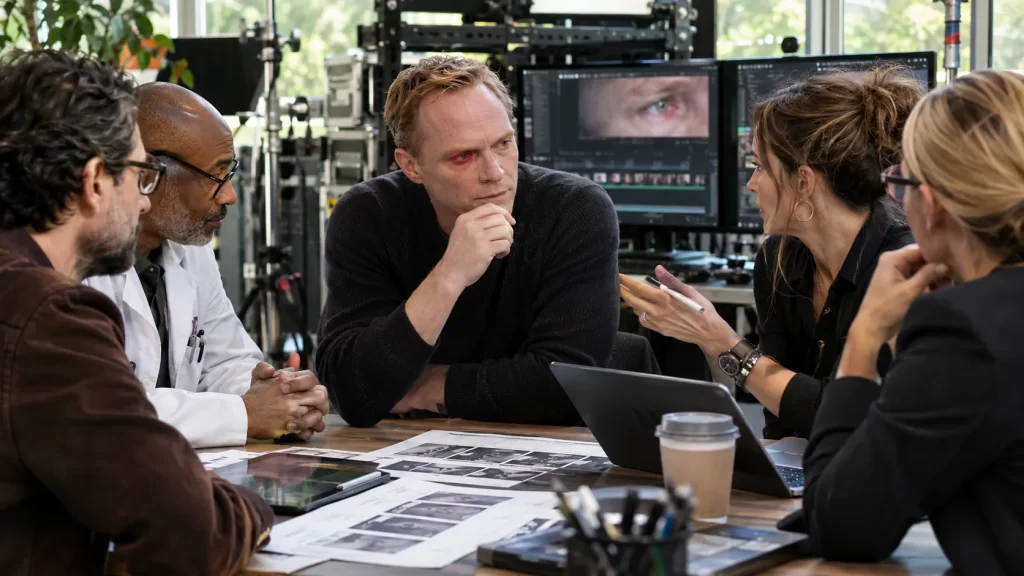
Digital postproduction can alter the appearance of an actor’s face, costume, or surrounding environment. Continuity teams also consider whether a temporary feature will change between shots filmed on different days.
Bettany joked that the production might have spent significant money correcting the red-eye appearance. He did not provide a detailed report on which shots were altered or how the work was completed.
For a character whose appearance relies heavily on makeup and effects, a conspicuous real-world eye injury could create a continuity challenge. But there is no need to invent a production delay, a reshoot, or a specific budget impact.
What Is VisionQuest About?
VisionQuest continues the story of Vision, the synthetic character Bettany has portrayed across the Marvel Cinematic Universe. The series explores questions about identity, memory, and emotion after the events of WandaVision.
The series arrived on Disney+ in October 2026, making Bettany’s behind-the-scenes story particularly timely for viewers watching the new episodes. His interview also focused on his experience portraying a character whose mind is central to the plot.
The injury anecdote was related to the acting required for one scene, not to a publicized stunt malfunction or an accident involving another performer.
How Can Productions Respond to Minor Performer Injuries?
Depending on the injury, a production might arrange medical assessment, adjust the schedule, change the demands of a scene, or plan around a temporary change in appearance.
Those decisions should be driven by professional assessment and the circumstances of the work. A performer with eye pain or new visual symptoms should not continue merely to protect a filming deadline.
Other examples of unexpected television workplace injuries appear in Celeb Injuries’ coverage of Joy Behar’s backstage shoulder dislocation and the broader On-Set Injury section.
Final Thoughts
Paul Bettany’s eye injury while filming VisionQuest is unusual because he linked it to the effort of performing an intense scene rather than a collision or fall. He said approximately 10 vessels ruptured and that the visible redness lasted around two weeks.
His experience draws attention to the delicate blood vessels on the eye’s surface and illustrates why medical context matters when a public figure shares a striking injury photograph. Fans can take reassurance from his account without assuming a more severe diagnosis than he has disclosed.