

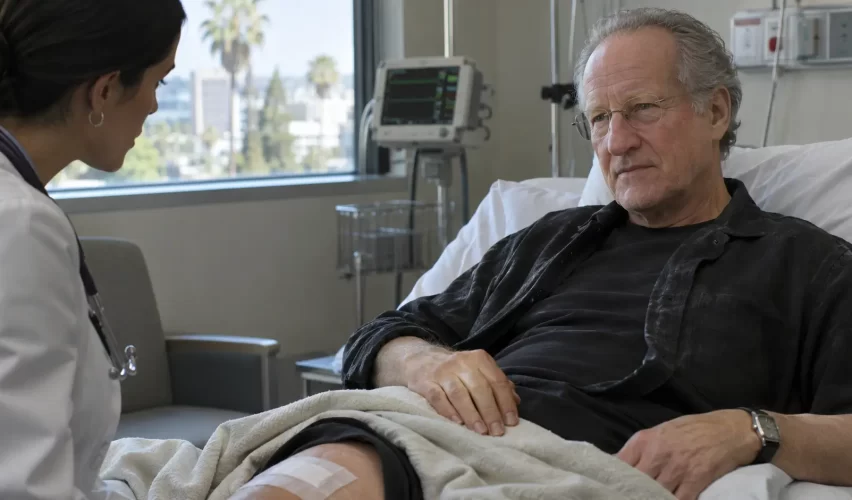
Director Michael Mann was treated at a Los Angeles hospital after a firearm accidentally discharged at a shooting range on October 31, 2026, causing what his representative described as a superficial leg injury. The filmmaker, known for Heat, Collateral, and Ferrari, was transported for medical assessment and was reportedly being released after treatment.
The accident drew attention because of Mann’s long career directing crime dramas, but the incident happened during a personal visit to a shooting range, not while filming a movie. Reports from police and his representative indicate that the shooting was accidental and that his condition was stable.
What Happened to Michael Mann at the Gun Range?
According to ABC News’ November 1 report, Mann was at a members-only shooting range in West Los Angeles on Saturday afternoon, October 31, when a firearm discharged as he was holstering it. Law enforcement sources said he was struck in the left thigh.
Officers responded to a report of shots fired in the 11100 block of Missouri Avenue at approximately 4 p.m. The Los Angeles Police Department subsequently determined that the discharge was accidental.
Range personnel reportedly offered assistance before emergency responders transported Mann to a local hospital. Police said an injury report was completed.
His representative described the wound as superficial. That is the publicly reported characterization, not a release of his complete medical examination.
What Did Mann’s Representative Say?
The filmmaker’s publicist said a weapon discharged accidentally while holstered, resulting in a superficial injury, and that Mann had been treated and was being released.
The Associated Press reported the statement on November 1 and identified Mann as an experienced target shooter. The AP also noted that he remained active in filmmaking, including development of a sequel to Heat.
The available reporting does not indicate that Mann underwent surgery, suffered a fracture, required intensive care, or experienced life-threatening complications.
Was Michael Mann Hospitalized?
Yes. Reports from law enforcement and his representatives state that paramedics transported him to a hospital, where he received treatment.
NBC Los Angeles reported that Mann was in stable condition after the incident and was released following treatment.
Hospital transport does not automatically mean an injury is life-threatening. Emergency professionals may recommend further assessment when a projectile or other penetrating injury could have affected deeper tissues, even if external damage initially appears limited.
In Mann’s case, the public updates were reassuring, but the precise procedures used during his hospital visit were not disclosed.
What Does a Superficial Leg Injury Mean?
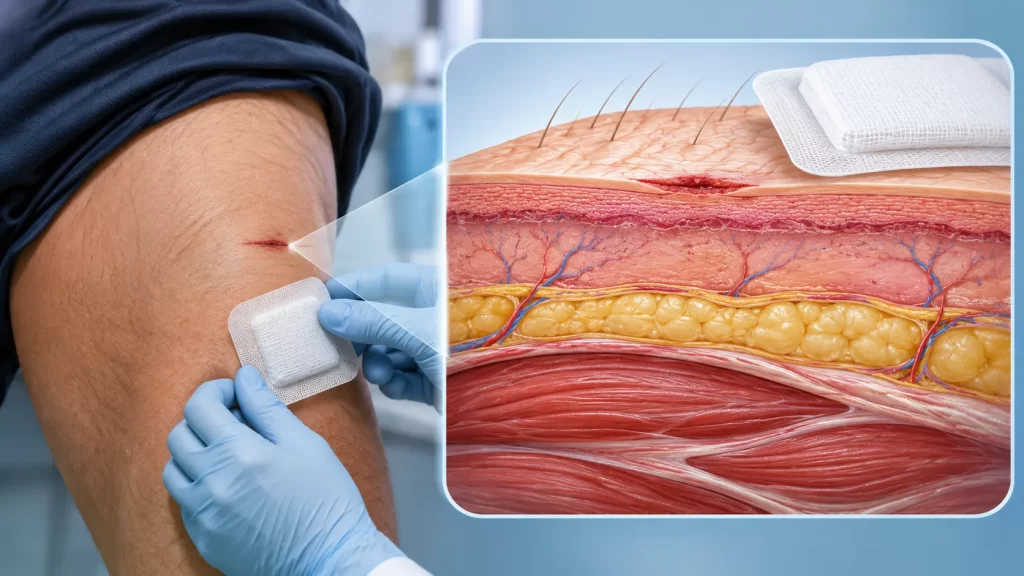
In ordinary medical use, superficial describes an injury affecting tissue near the body’s surface rather than extending deeply into underlying structures. It is a description of relative depth, not necessarily a complete diagnosis.
However, injuries from projectiles vary considerably. The affected area may need assessment for bleeding, tissue damage, contamination, and nearby important structures.
The MedlinePlus guide to gunshot wounds and aftercare explains that the consequences of a projectile wound depend on where it occurs and which tissues are affected. Some injuries are far more serious than their external appearance suggests.
Mann’s spokesperson characterized his specific injury as superficial, and there is no verified information indicating deeper damage.
Why Is a Professional Medical Evaluation Important?
Injuries involving a firearm should be professionally assessed because the visible wound alone may not establish the extent of harm. Clinicians may evaluate circulation, movement, sensation, pain, bleeding, and the location of the injured area.
Medical testing varies according to the findings. Not every patient needs surgery or advanced imaging, and no particular test should be attributed to Mann without an authorized medical update.
The National Library of Medicine’s overview of wounds and injuries emphasizes that serious, deep, or contaminated wounds may require urgent professional treatment.
Mann’s emergency transport and subsequent discharge illustrate why hospital evaluation and a favorable initial outlook are not mutually exclusive.
How Are Minor Wounds Generally Treated?
Treatment depends on the wound’s depth, contamination, size, and the patient’s condition. A healthcare professional may clean the area, determine whether foreign material is present, control bleeding, and apply an appropriate dressing.
The Mayo Clinic’s first-aid guidance for cuts explains that cleaning and protecting an uncomplicated wound can support healing and reduce infection risk.
Those routine recommendations should not be treated as instructions to manage a firearm-related injury without medical assistance. Such wounds need professional evaluation because deeper tissue involvement may not be obvious.
No detailed wound-care regimen has been publicly confirmed for Mann.
Could There Be an Infection Risk?
Any injury that breaks the skin creates a possible route for bacteria to enter the body. The level of risk depends on the wound and individual factors, including the condition of surrounding tissue and the care received.
Signs of infection can include increasing redness, warmth, swelling, drainage, worsening pain, or fever. The appearance of those symptoms during recovery warrants medical attention.
The CDC’s clinical guidance on tetanus and wound management also notes that vaccination status and wound characteristics are considered when determining whether preventive treatment is needed.
There is no public report that Mann developed a wound infection or required treatment for tetanus. These considerations apply to wound care generally.
Does a Superficial Wound Always Heal Quickly?
Minor wounds often improve over days or weeks, but healing speed varies. Location, movement, infection, underlying health conditions, and the type of tissue affected may all influence recovery.
Because Mann’s injury involved the leg, normal activities such as walking or prolonged standing could be relevant to a physician’s recovery recommendations, depending on the exact injury.
However, Mann has not disclosed specific restrictions on walking, travel, exercise, or filmmaking. There is no confirmed recovery timeline, and his hospital discharge does not provide one.
Celeb Injuries has previously explored the varied paths after medical treatment in Surgeries and Recovery: How Celebrities Bounce Back from Major Injuries.
What Did Police Conclude About the Shooting?
Investigators described the incident as accidental. The Los Angeles Police Department confirmed that responding officers determined the discharge was not an intentional shooting and completed an injury report.
The Los Angeles Times reported the statement from Mann’s representative and identified the incident as occurring at a sanctioned Los Angeles shooting range.
The reports do not establish that another person shot him, that the event happened during a movie production, or that any criminal charge resulted.
Why the Location Matters
Mann’s professional reputation for realistic action sequences has shaped some public reactions to the incident. His films often involve elaborate depictions of crime, police operations, and firearms.
Still, the accident happened at a recreational range, not on the set of Heat 2 or another project. It would be misleading to describe it as an on-set shooting or blame a film crew.
For readers interested in the very different precautions involved in movie productions, Celeb Injuries’ on-set safety protocols guide discusses how professional crews approach potentially hazardous scenes.
Could the Accident Affect Heat 2?
At 83, Mann remains a high-profile director. Reports about the injury arrived while he was developing a follow-up to his 1995 crime thriller Heat.
The CBS News report on the hospitalization noted that the director remains active in the industry and has been preparing the long-discussed project.
There has been no verified announcement that the accident caused a production postponement, a change in casting, or a permanent interruption to Mann’s work. Any future scheduling changes would need confirmation from the production or its representatives.
Why Accurate Reporting Matters After an Unusual Accident
A headline about a film director being shot can be alarming. In this case, the most important confirmed details are that the discharge was accidental, Mann remained stable, and his representative described the injury as superficial.
Responsible reporting should separate those established facts from speculation about surgery, a long hospital stay, or potential blame. His treatment details belong to him unless he chooses to share them.
For additional celebrity accident coverage, readers can visit Celeb Injuries’ Celebrity Accidents archive.
Final Thoughts
Michael Mann’s October 31, 2026, accident resulted in a reported superficial leg injury and hospital treatment after a firearm discharged at a Los Angeles shooting range. Police confirmed the incident was accidental, and his representative said the director was being released after receiving care.
The situation highlights the value of rapid emergency response and professional evaluation whenever a wound might involve deeper tissues. It also shows why a headline should not overshadow the actual reported medical outcome or turn an off-set accident into an unverified film-production controversy.