

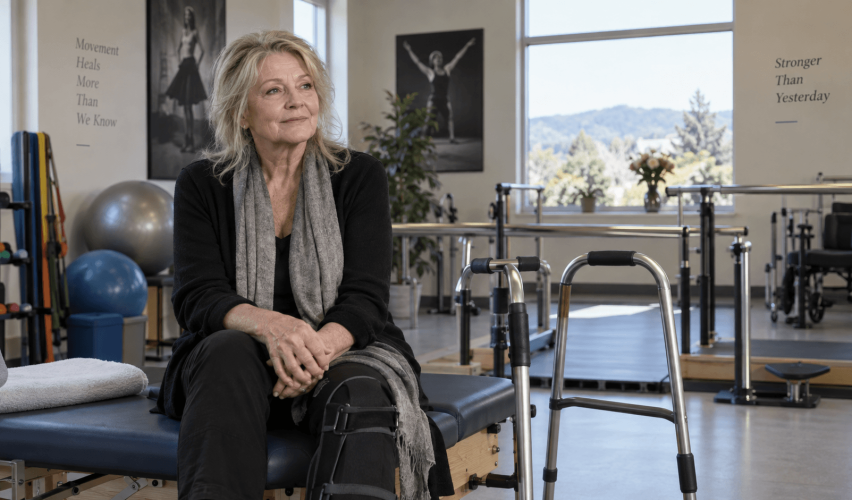
Annie Potts is reflecting on the extraordinary long-term impact of a car accident that changed the direction of her life more than five decades ago. In a new interview, the 73-year-old actress revealed that she has undergone approximately 26 surgeries related to the severe injuries she suffered when she was 21.
The Ghostbusters, Designing Women, and Young Sheldon star said the crash caused catastrophic injuries below her waist and that she recently underwent her third knee replacement on the same knee.
Her story demonstrates something that can be overlooked when discussing major accidents: recovery may continue for decades. Emergency treatment can save a person’s life, but severe orthopedic trauma can lead to additional operations, joint degeneration, rehabilitation, and new treatment decisions years later.
What Annie Potts Revealed About Her Injuries
Potts discussed her health history in a September 2026 interview with Woman’s World.
She explained that she originally expected to pursue musical theater before the 1973 accident dramatically altered her path. Potts described suffering extensive injuries from the waist down and said both legs were severely damaged.
She estimated that she has now undergone about 26 surgeries and said she recently had a third knee replacement performed on the same knee.
Entertainment Weekly highlighted the disclosure as Potts reflected on being repeatedly “put back together” through decades of medical treatment.
The 1973 Crash Changed Her Career
The collision happened when Potts was only 21 and had ambitions in musical theater. Severe leg injuries made that career path much more difficult at the time.
Her latest interview notes that she eventually made it to Broadway decades later, demonstrating how a major physical injury can delay a goal without necessarily eliminating it forever.
Earlier interviews have described compound fractures and extensive lower-body trauma from the crash. The medical details accumulated across decades show why a single high-energy accident can create a lifelong orthopedic history.
Why Serious Bone And Joint Injuries Can Have Lasting Effects
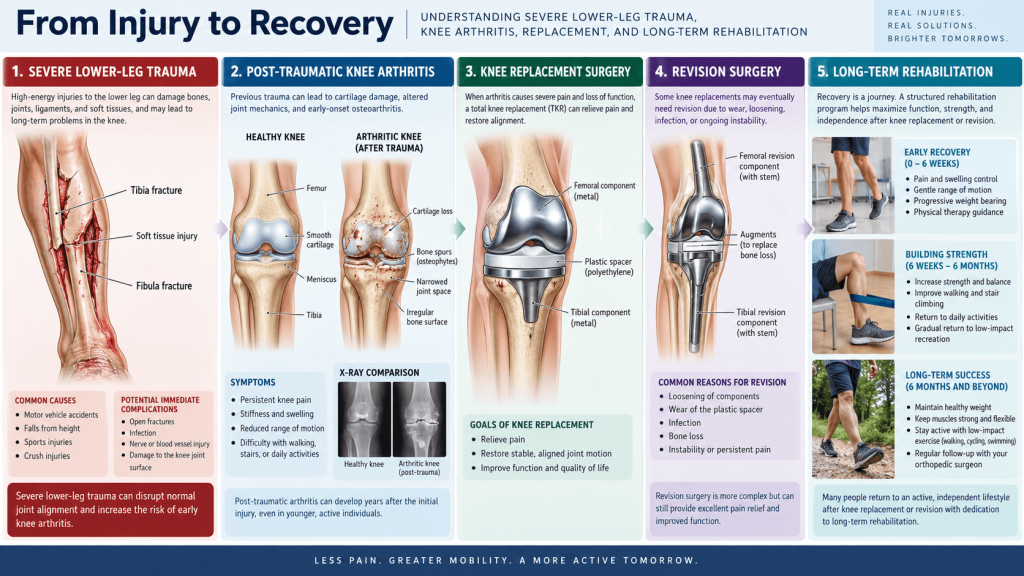
Broken bones can heal, but a healed fracture does not always leave a joint exactly as it was before the injury. Damage to cartilage, changes in alignment, scar tissue, joint instability, or altered walking mechanics can continue affecting the body.
One recognized long-term complication is post-traumatic arthritis. Research indexed by the National Library of Medicine explains that arthritis may develop after significant trauma around the knee even when the original injuries were treated successfully.
Another review of total knee replacement for post-traumatic arthritis found that joint replacement can improve pain and function but may involve particular challenges when previous fractures have altered the joint.
Why Someone Might Need More Than One Knee Replacement
Total knee replacement replaces damaged joint surfaces with artificial components. These implants are designed to provide many years of improved mobility and pain relief, but they are not necessarily permanent for every patient.
Components can wear, loosen, become unstable, develop infection, or require revision for other reasons. A person who receives a knee replacement relatively early in life may therefore eventually face another operation.
The Mayo Clinic explains that knee replacement is designed to relieve pain and restore function, while rehabilitation and gradual increases in activity are important after surgery.
Potts has said she has now undergone a third replacement on the same knee. She has not publicly provided a detailed surgical history explaining why each revision was necessary, so those reasons should not be assumed.
A Serious Accident Can Affect More Than One Joint
When trauma affects both legs, the consequences can spread beyond the originally fractured bones. People may unconsciously alter the way they walk to avoid pain or compensate for weakness.
Those changes can place different stresses on the knees, hips, ankles, and spine. Potts has previously discussed how damage below her waist required her body to make physical accommodations over time.
That history helps explain why a major accident should not always be viewed as a single medical episode with a clear end date.
Recovery Can Continue For Decades
Potts’ experience is an extreme example of long-term recovery. Immediate trauma care was only one stage. Reconstructive procedures, later joint operations, physical therapy, and additional surgeries continued across much of her adult life.
This pattern is explored more broadly in Celeb Injuries’ guide to celebrity surgeries and long-term recovery.
It also resembles the broader lesson from Simon Cowell’s long-term back injury: a person may return to work and normal life while still needing future medical treatment connected to an old accident.
Physical Therapy After Knee Replacement
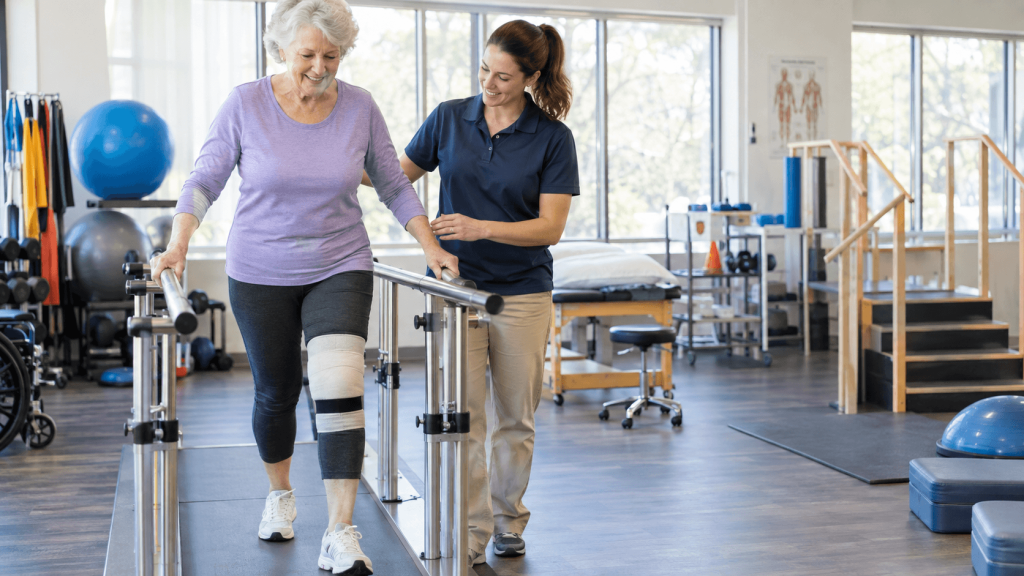
Rehabilitation is a major part of recovery after knee replacement surgery. Patients are commonly encouraged to begin moving relatively early while following precautions established by their surgical team.
Mayo Clinic notes that physical therapists typically help patients learn exercises designed to improve movement in the new joint. Rehabilitation may continue after discharge from the hospital.
Goals can include restoring range of motion, strengthening the muscles surrounding the knee, improving walking patterns, and gradually returning to everyday activities.
For a working actor, functional recovery may also include the ability to stand during long scenes, walk repeatedly through sets, climb stairs, travel, and tolerate extended production days.
How The Accident Reshaped Potts’ Career
Potts originally imagined herself working in musical theater, a field that can require demanding choreography and stage movement. Her injuries forced her to reassess that direction.
She went on to build a distinguished career in film and television. Her credits eventually included Ghostbusters, Pretty in Pink, Designing Women, Toy Story, and Young Sheldon.
Her eventual Broadway appearance decades after the crash also demonstrates that adapting a career after an injury does not necessarily mean permanently abandoning previous ambitions.
An ABILITY Magazine interview has previously explored how Potts continued performing while managing the consequences of her injuries and numerous operations.
What Post-Traumatic Arthritis Means
Post-traumatic arthritis can develop after injuries that damage cartilage or alter the normal mechanics of a joint. Symptoms may emerge relatively soon after trauma or many years later.
A review available through the National Library of Medicine describes how joint trauma can start biological and mechanical processes that eventually contribute to osteoarthritis.
Not everyone with a fracture develops severe arthritis, and it would be inappropriate to diagnose Potts based solely on general medical literature. Her multiple knee operations nevertheless illustrate why long-term orthopedic monitoring can be important after major trauma.
Repeat Surgery Can Require New Rehabilitation
One challenging aspect of revision surgery is that a patient who has already spent years recovering may need to restart parts of the rehabilitation process.
Every operation can bring new restrictions and new goals. Muscle strength may need to be rebuilt, swelling managed, walking mechanics retrained, and confidence restored.
For older adults, doctors may also consider overall health, bone quality, previous surgical changes, medication use, and fall risk when planning rehabilitation.
Why Potts’ New Disclosure Is Significant
The original crash occurred more than 50 years ago, but Potts’ September 2026 interview has made the story newly relevant because she has provided an updated picture of just how long the medical consequences continued.
A headline saying someone “recovered” after a crash may describe only the first chapter. Potts’ approximately 26 procedures show that severe trauma can create medical needs across an entire lifetime.
Celebrity Injury Reporting And Medical Privacy
Potts has chosen to discuss aspects of her surgical history publicly, but that does not make every medical detail available. Her exact diagnoses, surgical techniques, rehabilitation protocols, and reasons for individual procedures remain matters for her and her doctors unless she chooses to disclose them.
Responsible coverage should therefore separate what Potts has actually said from general medical information explaining how severe orthopedic trauma can affect patients over time.
A Different View Of Celebrity Recovery
Celebrity recovery stories often focus on a return to the red carpet, a television set, or a concert stage. Potts’ story offers a much longer perspective.
She returned to acting, built a career spanning decades, raised a family, and eventually performed on Broadway while continuing to deal with the medical consequences of injuries sustained at 21.
That history shows why returning to work does not necessarily mean a person is finished recovering.
Final Thoughts
Annie Potts’ latest disclosure about approximately 26 surgeries gives new perspective to a car accident that occurred more than half a century ago. Her severe lower-body injuries led to repeated procedures, including multiple knee replacements, while also forcing her to reconsider the direction of her career.
Her experience demonstrates how major orthopedic trauma can have consequences that extend far beyond the initial hospitalization. Recovery can involve adaptation, surgery, rehabilitation, career changes, and long-term medical monitoring over many years.
For more stories about accidents that continue affecting celebrities long after the original event, explore Celeb Injuries’ Celebrity Accidents and Celebrity Recovery sections.