
Nicole Scherzinger Leg Burn Before Pussycat Dolls Concert
Nicole Scherzinger suffered a painful leg burn from boiling water shortly before taking the stage with the Pussycat Dolls, turning what should have been routine concert preparation into an unexpected injury situation.
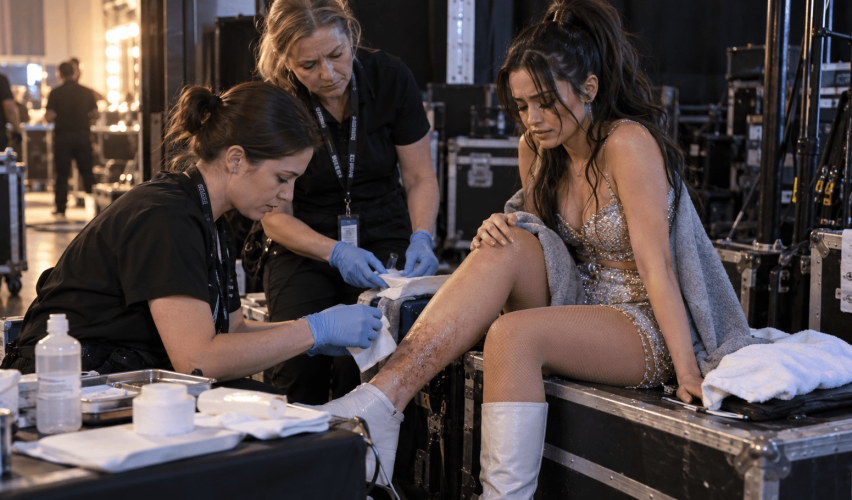
The singer revealed that boiling water fell on her leg approximately one hour before the group’s September 26 performance in Düsseldorf, Germany. Photos she later shared showed extensive redness and blistering along part of her leg. Despite the injury, Scherzinger went ahead with the concert.
The incident has drawn attention not only because of the timing but also because scald burns can vary significantly in severity. An injury that initially looks like redness may develop blisters, swelling, pain, or deeper tissue damage depending on the temperature of the liquid and how long the skin was exposed.
What Happened To Nicole Scherzinger?
According to People, Scherzinger said boiling water fell on her leg only about an hour before she was scheduled to perform at the PSD Bank Dome in Düsseldorf.
The 48-year-old singer shared an image after the show displaying burns and blisters extending along her lower leg. Entertainment Weekly reported that Scherzinger nevertheless completed the performance with bandmates Ashley Roberts and Kimberly Wyatt.
E! News also reported that the accident occurred immediately before the concert and that Scherzinger publicly thanked the Düsseldorf audience for helping her get through the show.
The exact medical classification of her burn has not been publicly confirmed. Although photographs showed blistering and redness, it would be inappropriate to diagnose the depth or degree of the injury from an image alone.
What Is A Scald Burn?
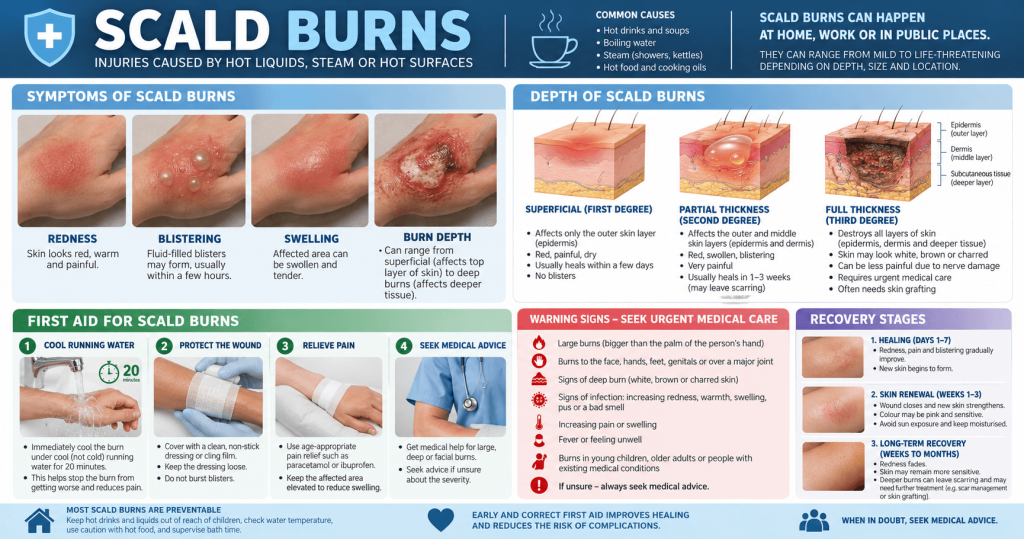
A scald is a thermal burn caused by hot liquid or steam coming into contact with the skin. Boiling water can cause tissue damage rapidly, which is why quick first aid can matter.
The American Burn Association explains that scald injuries can cause redness, pain, swelling, blisters, peeling, and, in more severe cases, areas of pale or charred skin.
Burn severity depends on several factors, including the temperature of the liquid, duration of contact, location of the injury, and depth of tissue damage.
Photos cannot reliably determine all of these factors, which is why medical evaluation is important when a burn is extensive, deeply blistered, located near a major joint, or otherwise concerning.
Why Blistering Matters After A Burn
Blisters can develop when heat damages deeper layers of the skin. They act as a natural protective covering over healing tissue and generally should not be intentionally broken without medical guidance.
The Cleveland Clinic advises against breaking burn blisters because doing so can increase the risk of infection.
For a performer, blistering on the leg can be particularly uncomfortable because costumes, movement, sweat, and repeated contact with clothing may irritate injured skin.
Scherzinger’s situation was especially challenging because she was preparing for a full concert involving stage movement and choreography rather than resting immediately after the accident.
What First Aid Is Recommended For A Scald?
Burn first aid starts with stopping the exposure and cooling the affected area. The Mayo Clinic recommends placing many minor thermal burns under cool running water. Ice should not be placed directly on burned skin because extreme cold can cause additional tissue damage.
The American Burn Association similarly recommends cool running water rather than ice, followed by loose coverage with clean gauze or cloth.
Tight jewelry or clothing near a burn may need to be removed before swelling develops, provided the material is not stuck to the injured skin.
These recommendations are general information rather than a description of Scherzinger’s personal treatment. She has not publicly detailed the specific first aid or medical care she received before going onstage.
When Does A Burn Need Medical Attention?
Not every burn requires emergency treatment, but some need prompt professional evaluation.
Mayo Clinic’s burn treatment guidance notes that deeper burns, large burns, rapidly swelling burns, and burns involving major joints or other sensitive locations may warrant emergency or specialized care.
Warning signs during recovery may include increasing redness, drainage, worsening pain, fever, or other indications of infection.
Because Scherzinger’s injury appeared to extend across a substantial portion of her lower leg, her recovery may require additional monitoring even though she was able to perform afterward. Performing successfully does not establish how deep or medically significant a burn is.
The Physical Demands Of Performing With A Leg Burn
Concert performances involve more than singing. Scherzinger’s shows with the Pussycat Dolls include choreography, stage movement, costume changes, lighting, and sustained physical activity.
Movement can create friction against burned skin, while heat and perspiration may increase discomfort. A performer may also unconsciously change the way they walk or distribute weight to protect an injured area.
Celeb Injuries has previously examined the broader hazards facing performers in The Hidden Dangers of Live Performances.
Similar questions about performing through physical problems arose in the site’s coverage of tour exhaustion and performer recovery.
Should Performers Continue After An Injury?
There is no universal answer. The appropriate decision depends on the injury, medical evaluation, physical demands of the performance, and whether continuing could worsen the condition.
Scherzinger chose to perform in Düsseldorf. That decision should not be interpreted as general advice that someone with a burn should continue strenuous activity.
For professional entertainers, pressure to avoid canceling can be substantial. Tickets have been sold, venues are booked, crews are working, and fans may have traveled long distances.
Nevertheless, health decisions should ideally be guided by medical considerations rather than the pressure to complete a show.
How Burns Can Affect Tour Scheduling
The Pussycat Dolls’ tour continued after Düsseldorf, meaning Scherzinger faced additional performances while the burn was still relatively recent.
RTÉ reported that the group continued its European schedule after the incident.
Tour personnel may need to adjust costumes, choreography, dressing-room procedures, travel schedules, or backstage medical support while an injury heals.
A burn around the knee or calf can also make prolonged standing, bending, and dancing uncomfortable even when the performer remains capable of appearing onstage.

Protecting A Healing Burn During Physical Activity
Burn recovery can require protecting the damaged skin from friction, contamination, and repeated trauma. Dressings may be used depending on the depth and condition of the wound.
More substantial burns can require professional wound care, pain management, scar management, physical therapy, or other follow-up treatment.
The Cleveland Clinic notes that significant burn injuries sometimes require specialized wound care or rehabilitation, especially when movement around a joint may be affected.
Performers also have the added challenge of costumes, makeup, quick changes, rehearsals, and travel environments that may complicate normal wound protection.
Production And Insurance Considerations
An injury shortly before a concert can create logistical questions even when the show ultimately proceeds. Promoters and tour managers may need to consider medical readiness, schedule changes, contractual obligations, and contingency plans.
If an injury results in postponed or canceled performances, insurance may become relevant depending on the terms of the applicable policy.
For broader context, Celeb Injuries has explored this issue in The Role of Insurance in High-Profile Injury Cases.
Why Scherzinger’s Injury Is A Useful Safety Reminder
Scherzinger’s injury did not result from a dangerous stunt or elaborate stage effect. It involved something as ordinary as boiling water.
That makes the incident a useful reminder that backstage areas contain everyday hazards alongside complex concert equipment. Hot beverages, kettles, catering equipment, electrical cables, costume racks, and crowded workspaces all require basic safety awareness.
A small change in backstage procedures, such as keeping hot liquids away from dressing and movement areas, may help reduce preventable accidents.
Final Thoughts
Nicole Scherzinger’s boiling-water accident demonstrates how quickly a routine backstage moment can become a painful injury. She completed her Düsseldorf performance despite burns and visible blistering, but the full medical severity of the injury has not been publicly disclosed.
Her experience highlights scald prevention, appropriate first aid, careful wound recovery, and the importance of balancing professional commitments with performer health.