
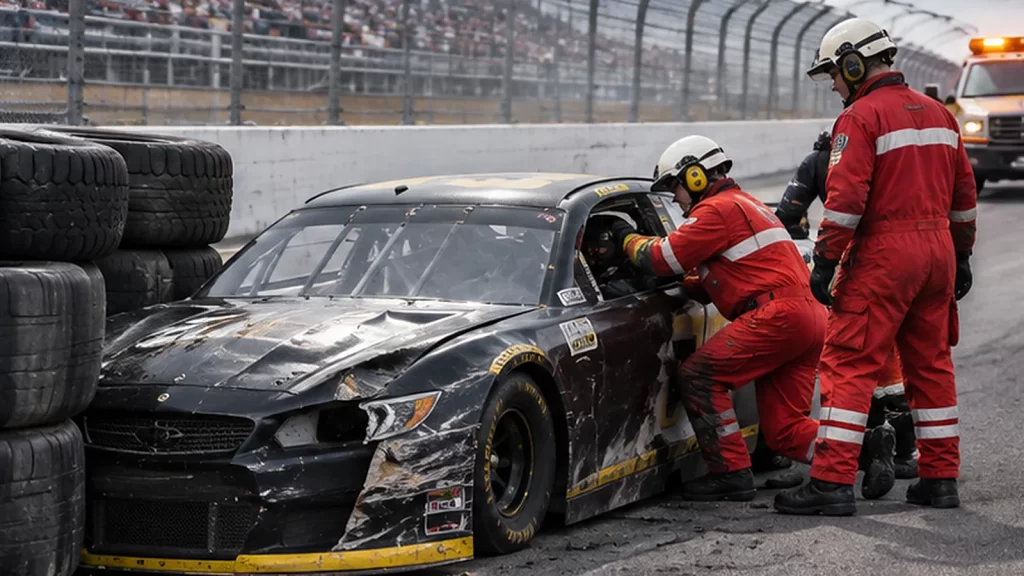
Frankie Muniz was taken to a hospital after crashing during a practice session at Daytona International Speedway on November 11, 2026. The former Malcolm in the Middle star, now a professional race car driver, was preparing for Ford’s Proud to Honor Veterans Day Classic when his Mustang struck a barrier. Emergency crews had to remove part of the vehicle’s roof to help him out.
Muniz, 40, was awake and alert when his team initially reported the crash. He later said he was extremely sore but had not sustained major injuries, thanked the medical and track safety teams, and expressed hope that he would return to racing soon. His experience illustrates why even drivers who seem stable after a high-impact collision can require medical examination.
What Happened to Frankie Muniz at Daytona?
According to NASCAR’s official November 11 update, Muniz was involved in an incident while practicing for the exhibition event and was transported to a local medical facility. Team Reaume said that the driver was awake and alert.
Additional reporting established that the crash happened on the infield road-course section of Daytona International Speedway. Muniz’s Ford Mustang Dark Horse struck a tire barrier, leaving the front of the car damaged. Safety workers responded and worked to free him from the vehicle.
People’s coverage of Muniz’s video update described how crews cut away the roof to assist with his extraction. The footage and photographs attracted attention because the rescue operation looked dramatic, even though Muniz subsequently reported no major injuries.
Why Did Rescue Workers Cut the Roof Off His Car?
After a major motorsport crash, the safest way to remove a driver depends on the condition of the vehicle, the driver, and the surrounding environment. A racing cockpit may have a narrow opening, structural bars, specialized seats, and multiple restraints that make ordinary vehicle exits difficult.
Cutting sections of a damaged vehicle can create more room for a controlled extraction. That does not, by itself, establish that the driver suffered a spinal injury or lost consciousness. The decision belongs to trained responders working with the circumstances they encounter.
The FIA’s discussion of modern motorsport medical response emphasizes training, appropriate equipment, and evolving extraction techniques. Racing medical crews must balance rapid access with avoiding unnecessary movement when a serious injury is suspected.
What Did Muniz Say About His Injuries?
Muniz shared an encouraging account after leaving the hospital. He thanked Ford Racing, Daytona International Speedway, the medical staff, and supporters, and credited the car’s construction with protecting him.
Entertainment Weekly reported that he described feeling very sore but having no major injuries. He was recovering at home in Phoenix when he discussed the incident in a subsequent video.
The public statements do not identify a fracture, concussion, internal injury, or surgery resulting from this crash. None of those diagnoses should be assigned to him merely because the vehicle sustained substantial damage.
Why Hospital Evaluation Matters After a Racing Crash
A powerful deceleration can affect the body even when a driver has no obvious external wounds. Medical professionals may evaluate pain, movement, consciousness, balance, neurological function, and possible injuries to the chest, neck, back, or extremities.
Some symptoms can become more noticeable after the initial adrenaline response subsides. The CDC’s traumatic brain injury guidance notes that concussion symptoms may appear immediately or develop later. Headache, dizziness, confusion, nausea, or unusual sleepiness after a significant impact deserve professional attention.
These signs are discussed as general medical information. There is no confirmed public diagnosis of a concussion in Muniz’s November 11 crash.
How Motorsport Safety Equipment Protects Drivers
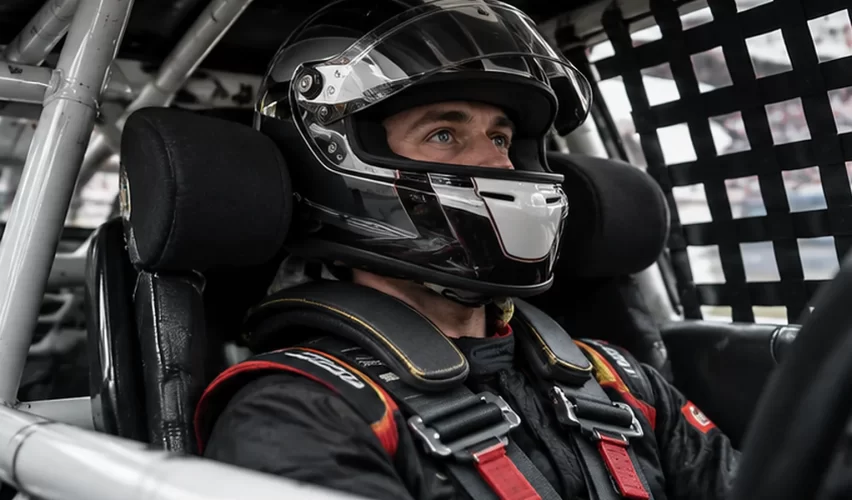
Modern competition vehicles use multiple layers of protection rather than relying on a single safety feature. A strengthened passenger compartment, racing seat, specialized harness, helmet, and head-and-neck restraint are designed to work together.
The NASCAR feature on the sport’s safety evolution explains how engineering improvements and extensive training have changed crash response. Teams and sanctioning bodies continue reviewing real-world incidents to identify opportunities for better protection.
The safety features may reduce certain risks, but they do not make high-speed competition harmless. Every impact has a different angle, speed, and pattern of forces, so outcomes vary.
What Does Post-Crash Soreness Mean?
Muscle soreness, stiffness, and tenderness can follow an impact even when medical examination does not identify a major structural injury. The severity and duration can vary, and a person’s activity level before the accident does not determine how quickly they will feel normal afterward.
People sometimes describe soreness casually, but that wording is not a medical diagnosis. Persistent, worsening, or unusual symptoms after a crash may require reassessment.
The CDC’s guidance on recovery after a mild brain injury also emphasizes that symptoms can change as normal activities resume. Although Muniz has not reported such an injury, the resource illustrates why drivers should follow their own medical team’s advice rather than relying on how they feel immediately after a crash.
Why He Missed the Veterans Day Classic
Muniz had been scheduled to participate in the Proud to Honor Veterans Day Classic, a Ford exhibition event supporting military and veterans organizations. He was paired with Team Penske driver Austin Cindric to represent the U.S. Air Force.
Associated Press reporting confirmed that Muniz could not compete following the practice crash. Ford development driver Jenson Altzman participated in his place.
Muniz said he was disappointed to miss the event because he had been looking forward to honoring service members and supporting the charitable cause. His absence was a precautionary consequence of the incident and the need for medical evaluation, not evidence that he had sustained a specific undisclosed injury.
How Does a Driver Return to Racing After a Crash?
A return-to-racing decision is different from being well enough to go home. Drivers must be capable of sustained concentration, accurate reactions, and controlling a vehicle under substantial physical demands.
Medical clearance and event rules may determine when someone resumes competition. A driver recovering from significant symptoms should follow instructions from qualified clinicians and relevant racing officials.
Muniz has said he hopes to get back on track soon. As of his reported update, however, he had not provided a precise medical clearance date, and a future race result should not be assumed.
From Child Actor to Professional Racer
Muniz became internationally known for starring in Malcolm in the Middle and appeared in films including Agent Cody Banks. He later pursued motorsport seriously, developing experience across several racing series.
In recent seasons, he has competed in the NASCAR Craftsman Truck Series with Team Reaume. His career now connects two very different public identities: television actor and professional driver.
That combination also makes injuries and safety events particularly visible to audiences who might not otherwise follow motorsport.
Why a Dramatic Extraction Does Not Prove a Serious Injury
Headlines describing a driver being cut from a race car can suggest the worst possible outcome. The rescue method, however, describes what responders did to access the occupant; it does not independently establish the occupant’s diagnosis.
Muniz’s statements provide a much more reassuring picture: he was evaluated, released, and later reported no major injuries. The case underscores why early reporting should be updated as reliable medical information becomes available.
Celeb Injuries has covered other vehicle-related injury stories, including Annie Potts’ long-term consequences after a serious car crash. Her experience demonstrates how profoundly collision outcomes can differ from one person to another.
Could the Crash Affect His Acting or Racing Plans?
Public reports have not confirmed a prolonged medical leave, surgery, or cancellation of additional future events because of the November 11 crash.
Professional commitments can still require adjustments after a medical evaluation, especially when travel and physical performance are involved. Teams must balance scheduling with the driver’s readiness and any instructions from medical personnel.
The broader issue of returning to professional activity after injury is addressed in Celeb Injuries’ guide to celebrity injuries, surgeries, and recovery.
Final Thoughts
Frankie Muniz’s November 11, 2026, crash at Daytona International Speedway required a coordinated trackside rescue and hospital assessment. Emergency personnel cut away part of the damaged car to assist him, while his racing team initially confirmed he was awake and alert.
His later update reported soreness but no major injuries. The incident is an important reminder that visible vehicle damage and the seriousness of a medical diagnosis are not the same thing. Protective engineering, experienced rescue crews, and medical evaluation remain essential parts of motorsport safety.
For more coverage of celebrity crashes, visit the Celebrity Accidents section at Celeb Injuries.