
Oliver Stark suffered a broken ankle while filming a stunt for the tenth season of ABC’s hit drama 9-1-1, according to new reports detailing several injuries on the television production.
The British actor, who portrays firefighter Evan “Buck” Buckley, reportedly sustained the fracture during a complicated action sequence in late August 2026. The injury required surgery, although Stark has since returned to work.
The accident became a major entertainment safety story after additional reports revealed that three other performers had suffered stunt-related injuries during production. With Season 10 approaching its October 15 premiere, the incidents have renewed discussion about stunt planning, injury reporting, and the pressures of producing action-heavy television.
What Happened to Oliver Stark on the 9-1-1 Set?
On October 9, 2026, Deadline reported on several stunt-related injuries involving performers working on Season 10 of 9-1-1.
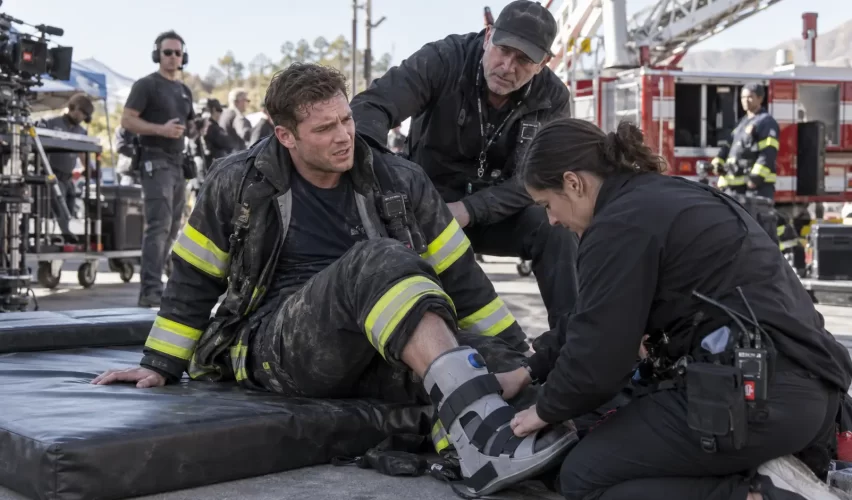
According to the report, Stark broke his ankle in late August while performing an action sequence involving a firefighter swinging from a car, traveling over a set piece, and reaching a ladder truck.
Sources described the stunt as a physically demanding maneuver requiring careful coordination among performers and crew members.
Deadline reported that a stunt double had previously sprained an ankle during rehearsal for the same sequence. The mechanics of the stunt were reportedly adjusted afterward.
Despite those adjustments, Stark sustained an ankle fracture during filming and subsequently required surgery.
People also covered the incident, reporting that Stark had returned to work following his injury.
Why the Stunt Was Physically Demanding
Television rescue dramas regularly depict dangerous situations involving collapsing structures, moving vehicles, elevated platforms, fires, explosions, and emergency equipment.
Although these scenes are carefully staged, performers can still encounter forces that affect balance, joint positioning, and landing mechanics.
The reported 9-1-1 stunt involved movement between vehicle-related set pieces and a ladder truck. Such sequences require precise timing and sufficient clearance around the performer’s landing area.
Even a relatively small difference in foot placement can place substantial force through the ankle.
These general mechanical risks help explain why complex action scenes require extensive preparation. They do not establish precisely why Stark’s fracture occurred or whether any particular safety decision caused it.
What Is an Ankle Fracture?
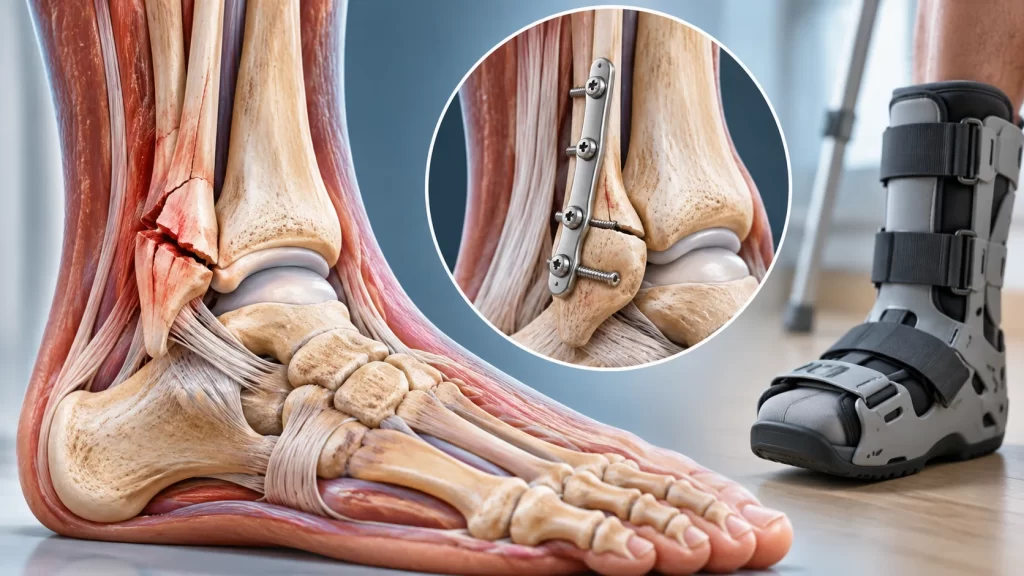
An ankle fracture occurs when one or more bones forming the ankle joint break. The three primary bones involved are the tibia, fibula, and talus.
The American Academy of Orthopaedic Surgeons explains that ankle fractures can range from relatively simple breaks to unstable injuries involving multiple bones or damage to surrounding ligaments.
Symptoms may include significant pain, swelling, bruising, difficulty standing, and visible deformity in more serious cases.
Some patients can still bear weight after a fracture, which means the ability to walk does not reliably rule out a broken ankle.
Public reporting has confirmed that Stark broke his ankle but has not identified the exact bone, fracture pattern, or associated ligament injuries.
Why Might a Broken Ankle Need Surgery?
Treatment depends on the stability of the ankle joint, the position of broken bone fragments, and whether supporting structures have been damaged.
Some stable fractures can heal with immobilization in a cast or walking boot. More complex fractures may require surgery to restore alignment and stabilize the bones.
Orthopedic surgeons sometimes use plates, screws, or other fixation devices to hold broken fragments in the appropriate position while healing occurs.
The AAOS explains that maintaining proper alignment can be important for preserving joint function and reducing the likelihood of certain complications.
Stark’s reported need for surgery confirms that medical professionals considered operative treatment appropriate. However, the specific operation and hardware used have not been publicly described.
Three Other Performers Were Reportedly Injured
Stark’s fracture was not the only injury discussed in Deadline’s October report.
According to sources cited by the publication, three additional performers sustained injuries during separate incidents associated with the production.
The reported injuries included:
- A stunt double who sprained an ankle while rehearsing the same sequence later performed by Stark.
- A stunt performer who suffered an arm laceration after encountering jagged metal on a set piece, requiring stitches.
- Another performer who sustained a broken rib and a minor lung injury after an awkward landing during a stunt involving a simulated ground collapse.
TMZ’s coverage of the reported stunt accidents also described the injuries and the concerns raised by their timing.
Deadline noted that the incidents did not appear to be connected. Their occurrence on the same production does not, by itself, establish a common cause or prove that a particular safety rule was violated.
Why Injury Reporting Matters on Film Sets
One notable detail involves the stunt double who reportedly injured an ankle during rehearsal.
Deadline reported that the performer declined medical treatment and that no formal injury report was submitted to production for that incident.
Documenting injuries and near misses can help safety teams recognize hazards, review equipment, and determine whether procedures need to change.
On an action-heavy production, communication among performers, stunt coordinators, production managers, and medical personnel can be especially important.
A rehearsal injury may provide useful information about landing conditions, the positioning of set pieces, or the demands of a particular movement.
These are general workplace safety principles rather than findings of wrongdoing in the Stark incident.
What Safety Standards Apply to Television Stunts?
Stunt-heavy productions use specialized planning and coordination to reduce the risks associated with simulated dangerous activities.
The industry safety bulletins published through Contract Services include recommended practices for motion picture and television productions.
Safety Bulletin No. 4 addresses stunt preparation and emphasizes appropriate planning, rehearsals, equipment inspections, and communication.
These bulletins are industry guidelines rather than laws, and applicable regulations can impose additional requirements.
SAG-AFTRA also provides stunt and safety resources for performers, including information about reporting workplace safety concerns.
A well-organized production uses these kinds of resources to support risk assessments before demanding action sequences.
How Stunt Coordinators Prepare Difficult Sequences
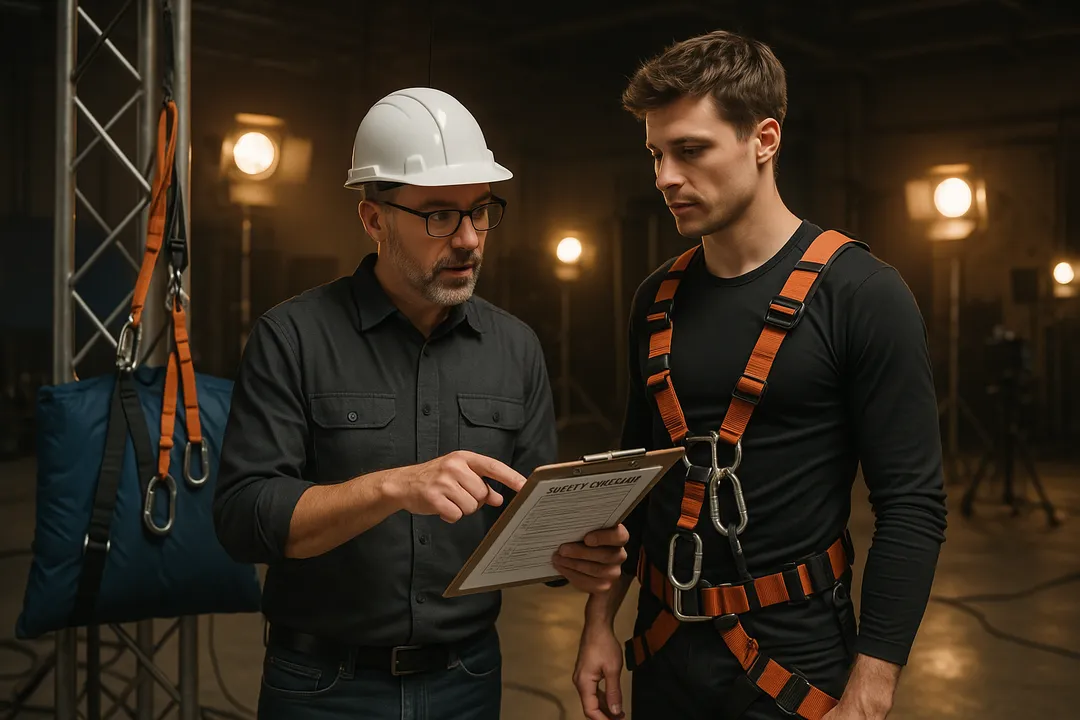
Complex stunts usually involve planning the movement, identifying potential hazards, selecting appropriate equipment, and deciding how the sequence will be filmed.
Rehearsals allow coordinators to examine distances, speeds, timing, and the placement of surrounding performers.
Depending on the scene, a production may use harnesses, protective padding, controlled platforms, stunt doubles, camera positioning, or visual effects to reduce exposure to physical hazards.
Deadline reported that 9-1-1 uses rehearsals with heavyweight bags and stunt performers before actors participate in certain sequences.
Those procedures demonstrate the complexity of planning action scenes, but even carefully organized stunts cannot eliminate every possibility of injury.
Celeb Injuries has previously explored similar questions in Stunt Double vs. Celebrity Injury Liability.
How Long Does an Ankle Fracture Take to Heal?
Recovery depends on the extent of the fracture, whether surgery was required, and whether ligaments or other tissues were injured.
According to the AAOS, many ankle fractures need at least six weeks for early bone healing, while more complete healing commonly takes 10 to 12 weeks or longer.
Swelling, stiffness, weakness, or difficulty returning to demanding movements may continue beyond the initial healing period.
Doctors often monitor the position and healing of the bones through follow-up examinations and imaging.
Because Stark’s exact fracture pattern and postoperative restrictions are private, a specific rehabilitation timetable cannot be assigned to him based only on the published reports.
Physical Therapy After Ankle Surgery
Rehabilitation following an ankle fracture generally aims to restore movement, strength, balance, and the ability to safely bear weight.
Patients may initially use crutches, a cast, or a walking boot. The timing of weight-bearing depends on the stability of the fracture and the surgeon’s recommendations.
Physical therapy may later include ankle mobility exercises, strengthening, balance work, and functional activities such as climbing steps or walking on uneven surfaces.
The AAOS cautions that placing weight on an ankle too early can interfere with bone healing in some cases.
For actors working in physically demanding roles, rehabilitation may eventually extend to movements needed for specific scenes.

How Could the Injury Affect 9-1-1 Filming?
Deadline reported that Stark had returned to work and that production continued following the injury.
Returning to a television set, however, does not necessarily mean an actor has resumed every activity associated with a physically demanding role.
Depending on medical restrictions, a production might adjust camera angles, staging, the number of physically intense takes, or the use of stunt doubles.
There has been no comprehensive public explanation of the specific accommodations, if any, made for Stark.
The relationship between injury recovery and production schedules is also discussed in Celeb Injuries’ article about celebrity surgeries and recovery.
Why the Timing Matters for Season 10
The reporting emerged just days before 9-1-1 was scheduled to return for its tenth season on October 15, 2026.
Action-driven television can involve demanding filming schedules because scenes must coordinate cast availability, equipment, special effects, production departments, and location requirements.
When an injury occurs, medical recovery must be considered alongside those commitments.
However, a production deadline should not determine whether a recovering performer is ready for physically strenuous activities.
What the Reports Do and Do Not Establish
The available reporting supports several important facts: Stark broke his ankle during a stunt, underwent surgery, and subsequently returned to production. Three other stunt-related injuries were also reported.
It does not establish the precise medical details of Stark’s fracture, his complete rehabilitation schedule, or whether a particular person or production decision was legally responsible for the accident.
Those distinctions matter when discussing entertainment workplace injuries, especially when reports raise legitimate safety questions without establishing every circumstance.
Readers can explore broader industry concerns in Celeb Injuries’ On-Set Injury section.
Final Thoughts
Oliver Stark’s ankle fracture during filming of 9-1-1 highlights the challenges associated with performing complicated television stunts.
The actor reportedly required surgery after the late-August accident but has since returned to work. Reports of injuries affecting three other performers have also brought attention to rehearsal procedures, safety communication, and the importance of documenting workplace incidents.
Stark’s experience is a reminder that convincing action scenes depend not only on performance and special effects but also on careful preparation, appropriate medical care, and recovery decisions that place performer safety first.