


Malaysian singer Siti Nurhaliza is recovering from facial injuries she sustained during rehearsals for her Konsert Tradisional Gema Bumantara in Kuala Lumpur. The 47-year-old music star fell while practicing a movement with a long fabric prop, leaving bruising on her right cheek and small cuts near her eye.
Although Siti Nurhaliza’s facial injuries did not prevent her from completing the October 17, 2026, concert, the bruises had not entirely faded by her October 28 health update. She said a CT scan taken after the accident showed no fractures or internal bleeding, and that the affected facial tissue still felt unusually firm.
Her experience highlights the risks of physically demanding concert rehearsals, the value of medical evaluation after facial trauma, and why visible bruises can take time to disappear even when more serious injuries have been ruled out.
What Happened to Siti Nurhaliza During Rehearsal?
According to mStar’s reporting on the rehearsal accident, Siti was practicing a jump involving a long piece of fabric when her foot became caught in the prop. She lost her footing and fell onto the floor.
The accident occurred roughly five days before her October 17 concert at Bukit Jalil’s National Stadium. Video of the incident, later shown as part of concert-related footage, provided context for the bruising fans had noticed on her face.
Reports described small wounds near the outer corner and below one eye, along with bruising on her right cheek. The accident happened during preparation for the show, not during the completed concert itself.
What Did Her CT Scan Show?
Siti sought medical attention after the fall and underwent a computed tomography, or CT, scan. In an October 28 interview, she said doctors found no fractures or internal bleeding.
The Star’s October 29 report confirmed her account and noted that her bruises were gradually improving without reported serious complications.
According to RadiologyInfo’s guide to head CT examinations, CT imaging can help doctors assess injuries involving the skull, facial bones, surrounding tissues and certain forms of internal bleeding.
Her reported results were reassuring, but the type of scan and its interpretation belong to her treating team. A CT result alone does not establish whether every possible injury, such as a concussion, was present or absent; no concussion diagnosis has been publicly confirmed.
Why Do Facial Bruises Sometimes Last for Weeks?
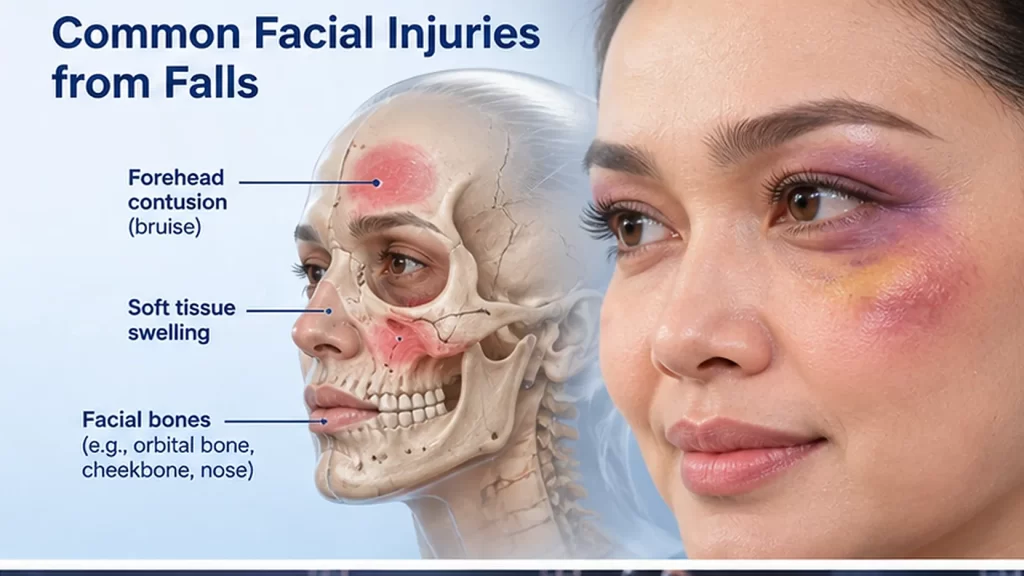
Bruising develops when small blood vessels break after an impact and release blood into nearby tissues. As the body gradually absorbs that blood, the discolored area changes in appearance.
The National Library of Medicine’s MedlinePlus guide explains that bruises commonly turn from red or purple to blue, green or yellow as they heal. Many fade within about two weeks, although deeper injuries can persist longer.
Siti said her sensitive skin appeared to make the blue discoloration especially slow to disappear. That is her description of her own recovery, rather than a medical explanation applicable to everyone.
Why Can Injured Facial Tissue Feel Firm?
In her update, Siti said the area of her face affected by the fall still felt somewhat hard. She believed the sensation was connected to the force of the impact and said she believed massage could be part of her recovery.
After a blunt injury, swelling and changes within the soft tissue can sometimes leave an area feeling different from the surrounding skin. A localized collection of blood, known as a hematoma, is another possible explanation for firmness in some patients.
However, it would be inappropriate to diagnose a hematoma or any other specific condition from her description. Cleveland Clinic’s information on bruising recommends medical evaluation for concerning lumps, persistent pain, or unusually prolonged bruising.
Massage should not be started around a recent facial injury without medical clearance, particularly when the area is near the eye or a fracture has not been excluded.
Why Falls Near the Eye Deserve Extra Attention
The eye and surrounding facial bones are delicate. Injuries near the eye may affect the skin alone, but more forceful impacts can sometimes involve deeper structures.
Mayo Clinic’s first-aid guidance for a black eye recommends professional assessment when bruising accompanies blurred or double vision, severe pain, bleeding inside the eye, or other concerning symptoms.
In Siti’s case, the available reports describe minor cuts and bruising near the eye but do not document a diagnosed eye injury or facial fracture. The distinction matters because photographs cannot establish the condition of deeper tissues.
How Are Facial Bruises Generally Treated?
Care depends on the severity of the injury, whether the skin is broken, and whether an underlying problem needs treatment. For an uncomplicated bruise, a clinician may recommend temporary rest and a cold compress wrapped in cloth to reduce swelling.
Mayo Clinic’s bruise first-aid recommendations caution against placing ice directly on the skin. Small cuts may require cleaning and protection, while deeper wounds can need additional care.
The goal is not simply to cover the discoloration with makeup. Persistent swelling, worsening pain, vision problems, or signs of infection should prompt medical advice.
Did the Injury Stop Siti Nurhaliza’s October 17 Concert?
Despite the accident, Siti completed Konsert Tradisional Gema Bumantara. She later expressed relief that the injuries were not more serious and gratitude that the show went ahead successfully.
The Straits Times reported that she was able to sing and complete the concert while the bruises remained visible.
Her ability to perform is encouraging, but it does not mean every aspect of the affected tissue had finished healing. A performer may be cleared for a specific activity while still needing time for bruising or swelling to settle.
How Stage Props Can Become Trip Hazards
The reported cause of the fall was a foot catching on fabric during a rehearsed jump. Long lengths of fabric can help create dramatic effects, but they also change the space in which a performer moves.
When choreography involves jumping, turning or stepping around a flexible prop, its position can shift between rehearsals. Performers and crew may need to assess how the material moves, where it gathers, and whether it could interfere with footing.
Celeb Injuries has previously discussed these concerns in The Hidden Dangers of Live Performances, including the importance of clear communication and identifying hazards before a show.

Could a Fall Cause a Concussion Without a Fracture?
A concussion is a type of traumatic brain injury that may follow a blow or jolt to the head. A fracture is not required for a concussion to occur, and ordinary imaging does not identify every concussion.
The CDC’s concussion symptom guidance identifies headache, dizziness, nausea, confusion and sensitivity to light among possible symptoms. A worsening headache, repeated vomiting, unusual confusion or new neurological symptoms requires emergency assessment.
There is no published confirmation that Siti suffered a concussion. Discussing the possibility in general is not equivalent to assigning that diagnosis to her.
What Her October 28 Recovery Update Means
Siti spoke about her condition on October 28 while attending an event in Putrajaya. She said the bruises were nearly gone, although some discoloration and firmness remained.
MalaysiaGazette’s coverage of her comments reported that she was relieved to have avoided fractures and internal bleeding and was grateful that her performance commitments had been completed.
This update describes gradual improvement, not a new hospitalization or a worsening condition. There is no confirmed announcement of surgery, permanent facial damage, or major additional treatment.
Balancing Performance Commitments With Recovery
Concerts involve financial and professional commitments, including ticket holders, production crews, travel arrangements and venue schedules. Those pressures can make injury decisions complicated.
Nevertheless, a medical assessment should guide whether someone can safely continue. The appropriate decision depends on the individual injury and the demands of the performance, not simply whether the artist feels capable of appearing onstage.
Similar questions arise in Celeb Injuries’ report on Nicole Scherzinger’s leg burn before a concert and its broader coverage of celebrity tour injuries and performer safety.
Final Thoughts
Siti Nurhaliza’s facial injuries after a concert rehearsal fall show how quickly a routine stage movement can become an accident. The singer sustained bruising and small cuts near her eye after her foot caught in a long fabric prop, but subsequent imaging reportedly found no fractures or internal bleeding.
She completed her October 17 concert and said on October 28 that her facial bruises were continuing to fade. Her experience reinforces the value of rehearsal safety, timely medical assessment and patience while damaged soft tissues heal.
For more stories about performers navigating injuries and recovery, explore Celeb Injuries’ Recovery & Rehabilitation coverage.