

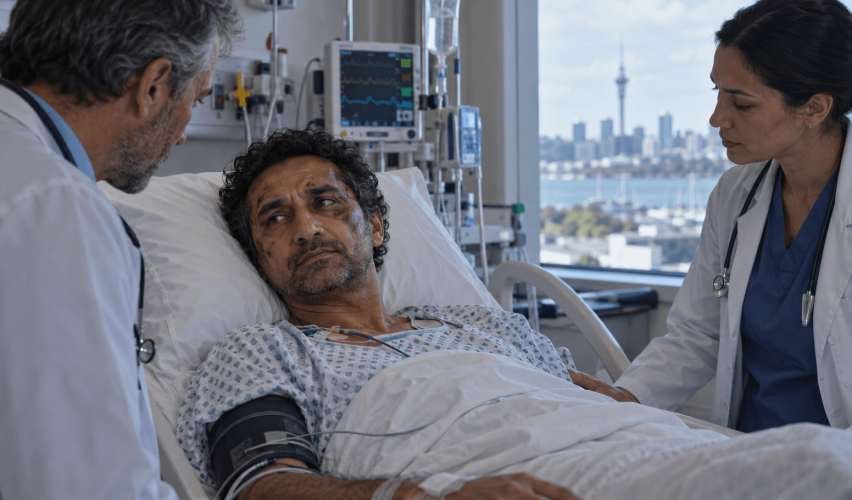
Actor Cliff Curtis was hospitalized with internal injuries after being involved in a serious vehicle collision on Auckland’s waterfront, bringing new attention to the potentially hidden injuries that can follow high-impact car crashes.
The New Zealand actor, known internationally for roles in the Avatar franchise, Fear the Walking Dead, Training Day, and Whale Rider, confirmed that he required hospital treatment following the September 23, 2026 collision.
Public reports have described Curtis’ injuries only as internal injuries. No detailed diagnosis has been released, so it would be inappropriate to assume which organs or body systems were affected.
What Happened To Cliff Curtis?
The collision occurred at approximately 10:30 p.m. on September 23 near the intersection of Jellicoe Street and Halsey Street on Auckland’s waterfront.
According to People, Curtis was among the occupants of a Tesla involved in a collision with a parked Prius taxi. The actor was later hospitalized with internal injuries.
New Zealand’s 1News reported that Curtis assisted other injured people with first aid immediately after the crash and remained at the scene until emergency services arrived.
The collision also seriously injured the taxi driver. Emergency responders transported multiple people to Auckland City Hospital.
Curtis later released a statement expressing concern for those who were hurt and their families. He also said he was cooperating fully with authorities investigating the crash.
Why Internal Injuries Can Be Difficult To Recognize
One of the most concerning aspects of a serious collision is that not every injury is immediately visible. A person may have relatively little external bleeding while still experiencing significant trauma inside the body.
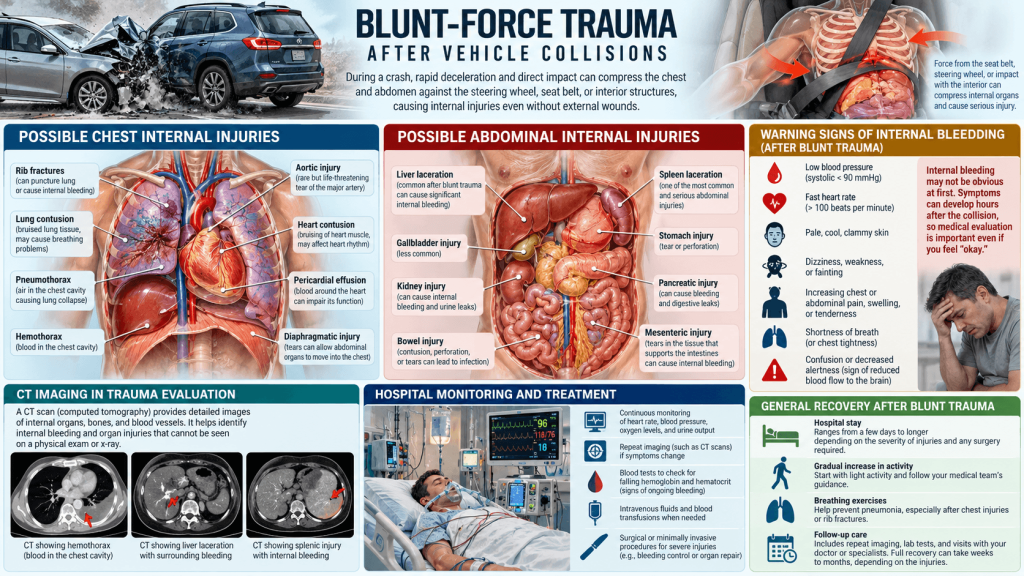
Cleveland Clinic explains that blunt-force trauma can damage bones, blood vessels, internal organs, muscles, and other tissues. Motor vehicle crashes are among the most common causes of this type of trauma.
Depending on the location and force of an impact, injuries can potentially affect the chest, abdomen, head, pelvis, or other areas of the body.
Internal injuries can range from relatively minor bruising of tissues to damage involving major organs or blood vessels. That wide range is one reason trauma patients may undergo extensive testing even when they appear stable immediately after a collision.
What Is Internal Bleeding?
Internal bleeding occurs when damaged blood vessels allow blood to collect somewhere inside the body rather than leaving through an external wound.
Cleveland Clinic notes that trauma from vehicle collisions is a common cause of internal bleeding. Symptoms can vary depending on where the bleeding occurs and how significant it is.
Possible warning signs can include dizziness, weakness, abdominal swelling, chest pain, difficulty breathing, unusual bruising, or symptoms associated with shock.
The Merck Manual also explains that major internal bleeding can occur after forceful impacts such as motor vehicle crashes. In some situations, symptoms may not be obvious immediately.
This general medical information should not be interpreted as describing Curtis’ specific injuries. His medical team has not publicly identified internal bleeding or disclosed the exact nature of his internal trauma.
How Doctors Evaluate Blunt Trauma
Emergency physicians have several tools available when evaluating someone following a significant vehicle collision.
Depending on the circumstances, the evaluation may include a physical examination, blood tests, neurological assessment, X-rays, ultrasound, CT imaging, or other diagnostic testing.
Cleveland Clinic explains that CT scans are particularly useful for detecting many injuries caused by blunt-force trauma. Ultrasound can also help doctors rapidly look for certain forms of internal bleeding.
Doctors may repeat tests or continue monitoring when an injury has the potential to change over time.
Why A Person Can Initially Appear Stable
Some trauma injuries are immediately obvious, while others become more apparent over time. Adrenaline after a crash can also influence how a person feels in the first moments after an accident.
In Curtis’ case, reports indicate that he was able to help other injured people after the collision despite later requiring hospital care himself.
That does not mean his injuries were minor. It illustrates why a person’s activity immediately after a collision cannot reliably determine whether they have serious internal trauma.
Anyone involved in a significant crash should allow qualified emergency professionals to determine whether medical evaluation is necessary.
Abdominal Injuries After A Vehicle Collision
Blunt trauma to the abdomen can potentially injure organs including the liver, spleen, kidneys, pancreas, intestines, bladder, or blood vessels.
The Merck Manual explains that motor vehicle collisions can cause abdominal injury through direct impact or rapid changes in speed. Some injuries produce bruising or hematomas, while more severe trauma can cause tearing or internal bleeding.
Again, there is no public confirmation that Curtis sustained abdominal trauma specifically. This information simply helps explain why the term “internal injuries” can cover many different medical situations.
The Importance Of Emergency Response
Reports from New Zealand indicated that emergency responders faced a serious scene. Fire personnel reportedly had to free the taxi driver from the vehicle before medical teams transported injured people to the hospital.
Rapid trauma response can be crucial when internal injuries are possible because significant bleeding or organ damage may require urgent treatment.
Depending on the injury, treatment can range from monitoring and supportive care to blood transfusion, interventional procedures, or surgery.
Curtis Helped Other Injured People
One unusual detail from the incident is Curtis’ reported effort to assist others before emergency personnel arrived.
His statement said he provided first aid to people who had been hurt. The actor also expressed sadness over the collision and concern for everyone affected.
The circumstances serve as a reminder that a serious crash can involve multiple victims whose injuries differ significantly even though they experienced the same collision.
What Happens During Recovery From Internal Trauma?
Recovery varies dramatically depending on the structure injured, the severity of the trauma, and whether surgery was necessary.
Some internal injuries can be monitored while the body heals. Others require procedures to control bleeding or repair damaged organs.
Hospital teams may also monitor blood pressure, breathing, blood counts, pain, organ function, and other indicators during the recovery period.
After discharge, patients may need restrictions involving lifting, exercise, driving, work, or travel depending on the nature of their injuries.
Readers interested in how severe injuries can lead to extended rehabilitation can also read Celeb Injuries’ article Surgeries and Recovery: How Celebrities Bounce Back from Major Injuries.
Could The Crash Affect Curtis’ Acting Career?
Curtis remains a prominent film and television actor whose recent credits include the Avatar franchise and Monarch: Legacy of Monsters.
Whether the crash will affect any future filming commitments has not been publicly announced.
Productions involving physically demanding scenes may have to consider an actor’s medical restrictions during recovery. Travel, long filming days, action sequences, costume requirements, and repeated takes can all become more difficult following significant trauma.
That issue has appeared in other Celeb Injuries stories, including Annie Potts Reveals 26 Surgeries After Devastating Car Crash, which illustrates how vehicle trauma can sometimes have consequences extending well beyond the original hospital stay.

Insurance And Legal Issues After A Celebrity Car Crash
Because authorities are still investigating the Auckland collision, it is important not to speculate about fault or legal responsibility.
Car crashes involving serious injuries can create questions involving automobile insurance, medical costs, property damage, liability, and compensation. The applicable rules depend on the jurisdiction and the facts established during the investigation.
Celeb Injuries discusses broader insurance issues in The Role of Insurance in High-Profile Injury Cases.
Why Responsible Reporting Matters
Terms such as “internal injuries” can sound alarming, but they do not identify a specific diagnosis. Readers should be cautious about social-media speculation claiming that Curtis injured a particular organ or suffered a particular complication.
The most reliable information currently available is that Curtis was hospitalized, described his injuries as internal, assisted other injured people after the collision, and said he was cooperating with authorities.
Additional medical details should be treated as private unless Curtis or his representatives choose to release them.
Explore Related Articles
Browse connected articles for additional context and updates.
- Annie Potts’ long-term recovery after a devastating car crash
- Tori Spelling and her children hospitalized after a car crash
- Josh Hartnett’s hospitalization after a vehicle collision
- Surgeries and recovery after major celebrity injuries
- Insurance in high-profile injury cases
Helpful External Resources
Access trusted websites for more detailed injury and recovery information.
- People’s report on Cliff Curtis’ Auckland crash
- New Zealand Herald’s report on the waterfront collision
- Cleveland Clinic’s guide to blunt-force trauma
- Cleveland Clinic’s guide to internal bleeding
- MSD Manual’s overview of internal bleeding after trauma
Final Thoughts
Cliff Curtis’ Auckland car crash demonstrates why significant vehicle collisions require medical evaluation even when injuries are not immediately visible. The actor was hospitalized with internal injuries after the September 23 collision, while another person involved was also seriously hurt.
His case highlights the risks of blunt-force trauma, the importance of emergency response, and the need to avoid guessing about medical details that have not been publicly confirmed.
As Curtis recovers, future updates should come from the actor, his representatives, medical professionals speaking with authorization, or reliable reporting based on official sources.