

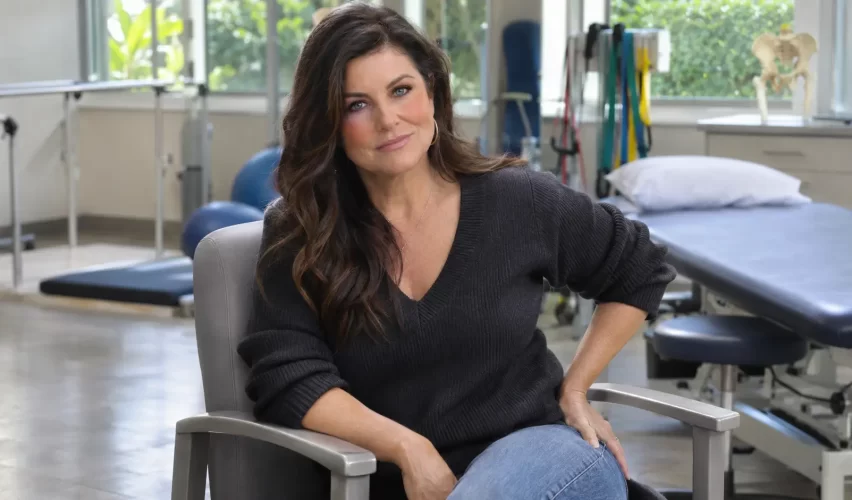
Tiffani Thiessen says she needs a hip replacement after doctors identified a torn labrum and hip dysplasia, conditions that have made everyday movement and recreational sports increasingly painful. The 52-year-old actress discussed her hip problems during the November 10, 2026, episode of Breaking Bread with Tom Papa, explaining that a second medical opinion helped clarify why she had been struggling.
The former Saved by the Bell and Beverly Hills, 90210 star said she has recently been unable to play pickleball because of the pain. Her announcement offers an opportunity to explain adult hip dysplasia, the purpose of the labrum, and what patients may consider when hip replacement becomes an option.
Important distinction: Thiessen has said she needs a replacement. She has not publicly announced that the operation has already been performed or provided a confirmed surgery date.
What Did Tiffani Thiessen Reveal About Her Hip?
In People’s November 16 report, Thiessen described two distinct findings: a torn hip labrum and hip dysplasia. She first learned about the labral problem, then received the dysplasia diagnosis after seeking a second opinion.
Thiessen linked her history of dancing and unusual flexibility as a child to the issues she is experiencing now. That is her personal interpretation, not a confirmed finding that childhood dance caused her particular hip condition.
E! News also reported her comments and explained how pain has prevented her from joining family pickleball games in recent weeks.
What Is Hip Dysplasia in Adults?
The hip is a ball-and-socket joint. The round head of the thighbone fits inside a socket in the pelvis, allowing a wide range of movement while supporting much of the body’s weight.
Hip dysplasia occurs when the ball and socket do not fit together normally, often because the socket is too shallow or does not provide enough coverage. This can lead to instability and abnormal pressure on cartilage and other joint tissues.
The Cleveland Clinic’s hip dysplasia overview explains that many people are born with the structural difference, even when symptoms do not become noticeable until later life.
Hip dysplasia is not necessarily caused by a single accident or recent activity. The anatomy may have been present for years before pain became significant.
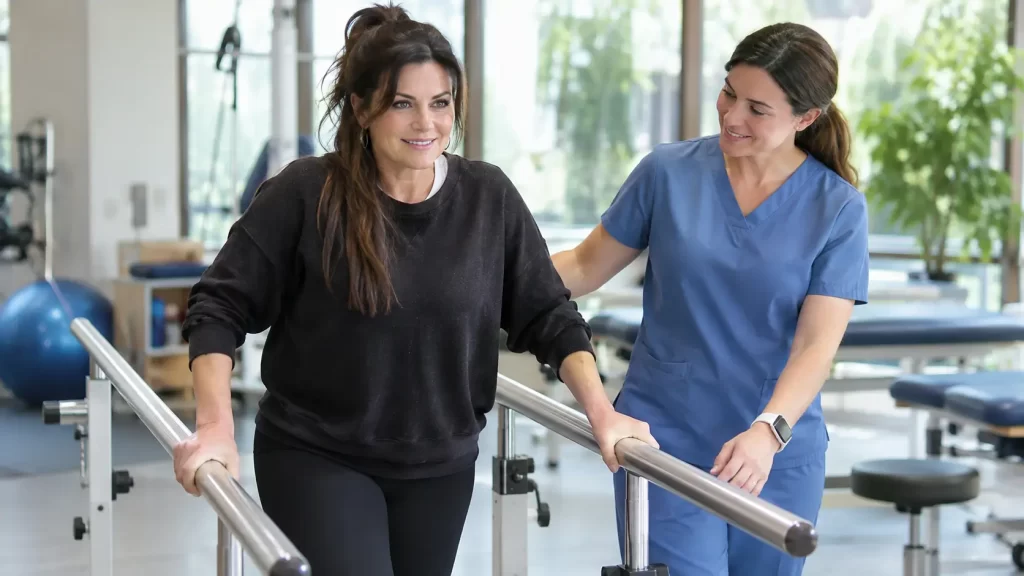
How Does Hip Dysplasia Affect the Labrum?
The labrum is a ring of cartilage that surrounds the edge of the hip socket. It helps provide stability and creates a seal around the ball of the joint.
When a hip socket offers insufficient coverage, the labrum may experience additional forces during everyday movement and exercise. Over time, that stress can contribute to damage or a tear.
The Mayo Clinic’s guide to hip labral tears recognizes dysplasia as a structural factor associated with labral damage.
Because Thiessen reported both conditions, this connection helps explain how the problems can coexist. It does not establish which abnormality developed first or the exact state of the joint’s cartilage.
What Symptoms Can a Torn Hip Labrum Cause?
Some people with labral tears experience no symptoms. Others report pain deep in the hip or groin, stiffness, clicking, catching, or difficulty with movements that involve twisting or prolonged sitting.
The Cleveland Clinic’s labral tear guide notes that pain may become more noticeable during exercise and certain positions.
Thiessen specifically reported significant hip pain that interfered with playing pickleball. She has not publicly provided a full symptom diary, imaging findings, or detailed description of every activity that triggers discomfort.
Does Childhood Dancing Cause Hip Dysplasia?
Thiessen connected her hip difficulties with having been a particularly flexible young dancer. However, medical literature generally describes dysplasia as a structural developmental condition rather than an injury created simply by dancing.
Activities involving substantial hip movement may reveal symptoms or place additional stress on an already vulnerable joint. This is different from establishing that those activities created the original socket anatomy.
The Mayo Clinic explanation of hip dysplasia notes that milder cases may not become symptomatic until adolescence or adulthood.
Without the actress’s full medical history, it would be inappropriate to attribute her dysplasia to a particular childhood activity.
Why Is Pickleball Difficult When a Hip Hurts?
Pickleball involves accelerating, stopping, pivoting, reaching sideways, and repeatedly shifting weight from one leg to the other. Those movements can aggravate hip symptoms in people with certain joint conditions.
Thiessen said that playing with her children has recently become difficult. She also made clear that her doctor did not specifically blame pickleball for her condition.
For someone experiencing hip pain, the appropriate activity level depends on the underlying diagnosis and medical advice. Switching to a less provocative activity may be useful for some patients, but it does not correct an underlying structural problem.
Why Might a Hip Replacement Be Recommended at 52?
Total hip replacement is not reserved for people above a particular age. Specialists consider pain, loss of function, joint condition, and response to other treatments when deciding whether the procedure is appropriate.
The American Academy of Orthopaedic Surgeons explains that patients may consider replacement when pain interferes with walking, daily activities, or rest and other approaches have not provided sufficient relief.
During a total replacement, damaged joint surfaces are replaced with artificial components. These are designed to improve mobility and reduce pain, although outcomes depend on individual health and the joint’s condition.
Thiessen has not publicly explained exactly how her physicians weighed alternative treatments, so no particular medical decision should be inferred beyond her statement that she needs the operation.
Does a Labral Tear Always Require Hip Replacement?
No. A labral tear may sometimes be treated with activity changes, appropriate physical therapy, medication, or a procedure intended to repair the labrum. Some patients do not need surgery.
Mayo Clinic describes conservative and surgical options for labral tears depending on symptoms and associated structural damage.
In patients with hip dysplasia, clinicians also consider socket anatomy, cartilage wear, age, activity requirements, and long-term stability. Treatment for a relatively preserved joint may differ from treatment for an extensively damaged one.
It would be misleading to claim every patient with the conditions Thiessen reported will need a replacement.
What Happens During Hip Replacement Surgery?
A total hip arthroplasty replaces damaged joint surfaces using components commonly made from metal, ceramic, or medical-grade plastic. The precise approach, implant, and postoperative precautions are selected by the treating team.
The National Institute of Arthritis and Musculoskeletal and Skin Diseases describes the procedure and highlights the importance of preparing for rehabilitation and support at home.
Although Thiessen has said she anticipates needing a replacement, she has not disclosed a surgeon, implant type, surgical approach, or date. Any account of her postoperative course would therefore be hypothetical at this stage.
How Long Does Hip Replacement Recovery Usually Take?
Recovery is gradual and highly individual. Many patients begin walking with assistance soon after surgery, but rebuilding strength, endurance, and confidence takes longer.
The AAOS hip replacement exercise guide describes progressive walking and therapist-directed exercises as important parts of rehabilitation. The NIAMS explains that much recovery occurs in the first months, while improvements can continue through the following year.
A single average timeline cannot predict when a television performer will return to travel, long filming days, workouts, or high-intensity sport.

Could the Condition Affect Her Acting Work?
Thiessen continues to work as an actress. A production day may involve standing for long periods, traveling, climbing steps, or repeatedly moving between sets.
Hip pain can interfere with such tasks depending on severity. If surgery is scheduled, a production may need to accommodate medical appointments, mobility limitations, or recovery time.
However, no verified announcement establishes that Thiessen has canceled a project or arranged a particular leave of absence because of a hip operation.
Celeb Injuries has previously explored how orthopedic conditions and surgeries can affect performers in Annie Potts’ account of long-term orthopedic treatment and its guide to celebrity surgeries and recovery.
Why It Is Too Early to Discuss a Postoperative Outcome
Headlines sometimes turn a future operation into a completed medical event. In Thiessen’s case, that would distort what she actually revealed.
She has shared a diagnosis and the expectation that hip replacement will be necessary. She has not publicly confirmed a completed operation, a complication, or a rehabilitation milestone.
Her willingness to discuss pain and reduced activity should not become a basis for guessing at undisclosed medical findings.
Final Thoughts
Tiffani Thiessen’s November 2026 comments reveal a painful combination of hip dysplasia and a torn labrum. After seeking a second opinion, she said she needs hip replacement surgery and explained that symptoms have recently prevented her from enjoying pickleball with her family.
Her story emphasizes the importance of recognizing structural joint problems, exploring treatment options with qualified professionals, and avoiding assumptions about recovery before an operation occurs.
For related accounts of celebrity orthopedic conditions, explore Celeb Injuries’ Recovery & Rehabilitation coverage.