


Joy Behar temporarily stepped away from The View after a backstage mishap left the longtime co-host with a dislocated shoulder.
The 83-year-old television personality reportedly caught her heel backstage before the October 1, 2026 broadcast. Her representative later confirmed that Behar’s shoulder was not broken and had been put back into place.
Although Behar is expected to return relatively quickly, a shoulder dislocation is a significant orthopedic injury that can involve more than the joint simply moving out of position.
What Happened To Joy Behar?
Behar was unexpectedly absent from the October 1 edition of The View. Co-host Sunny Hostin explained on air that Behar had dislocated her shoulder and was recovering.
Entertainment Weekly reported that Hostin temporarily moved into the moderator’s chair while both Behar and Whoopi Goldberg were absent from the program.
Additional reporting later clarified what happened backstage. Behar’s representative said she caught a heel, resulting in the shoulder injury.
Her representative also said the shoulder was not fractured and had already been returned to its normal position. Behar was described as being on the mend and eager to return to the show.
What Is A Dislocated Shoulder?
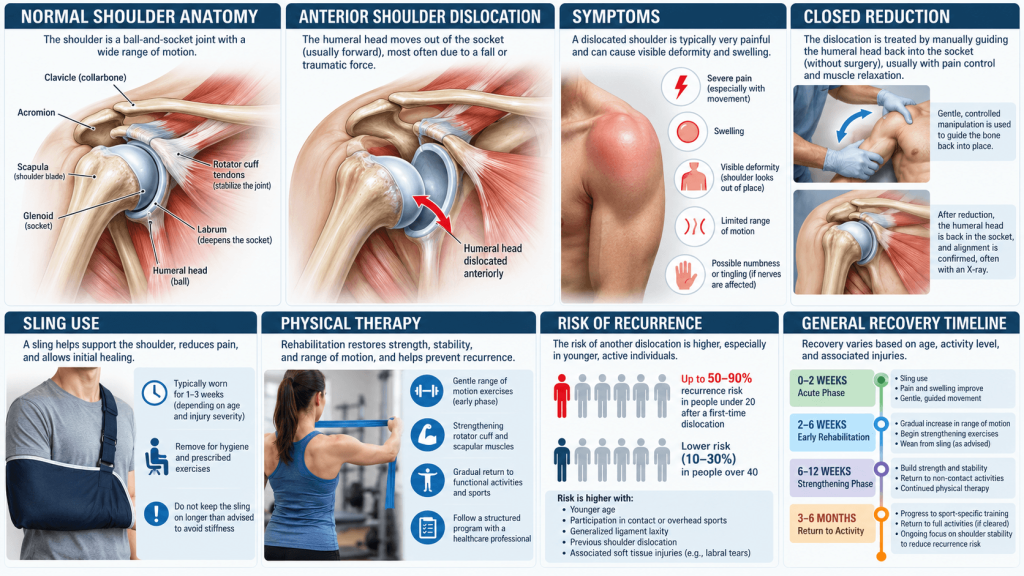
The shoulder is a ball-and-socket joint. A dislocation occurs when the upper part of the arm bone moves out of the socket in the shoulder blade.
Mayo Clinic explains that the shoulder is particularly vulnerable to dislocation because it has a very wide range of motion.
A dislocation can happen during sports, a vehicle collision, or a fall. In Behar’s case, the reported mechanism was a backstage trip after catching her heel.
Symptoms commonly include intense pain, visible deformity, swelling, bruising, and difficulty moving the arm.
Why A Shoulder Dislocation Needs Medical Treatment
A shoulder that has moved out of its socket should be evaluated promptly by a qualified medical professional.
Mayo Clinic and Cleveland Clinic both warn against attempting to force the shoulder back into position without proper training. Doing so can potentially injure surrounding nerves, blood vessels, muscles, tendons, or ligaments.
Medical professionals may use a procedure known as closed reduction to guide the joint back into its normal position.
Depending on the patient’s pain and muscle spasm, medication or sedation may be used during the procedure.
Behar’s representative has confirmed only that the shoulder is back in place. Details about where or how the reduction was performed have not been publicly released.
A Dislocation Is Different From A Fracture
Reports about Behar specifically noted that her shoulder was not broken.
A fracture involves a break in a bone. A dislocation involves bones in a joint moving out of their normal alignment. It is possible for both injuries to occur together, but Behar’s representative said no fracture was identified.
Doctors commonly use X-rays to confirm a dislocation and check for broken bones. CT or MRI imaging may sometimes be used to identify additional damage.
What Can Be Damaged During A Shoulder Dislocation?
The shoulder contains more than bone. Muscles, tendons, ligaments, cartilage, nerves, and blood vessels all surround the joint.
Cleveland Clinic explains that shoulder dislocations can sometimes cause ligament injuries, tendon damage, muscle strains, fractures, or nerve and blood-vessel problems.
The presence and severity of those injuries vary from patient to patient.
There is currently no public evidence that Behar experienced any of these complications, so they should not be attributed to her specifically.
How Long Does Shoulder Dislocation Recovery Take?
Recovery time depends on the severity of the dislocation and whether other structures were damaged.
Mayo Clinic says a straightforward shoulder dislocation without major nerve or tissue damage can improve within several weeks. Cleveland Clinic notes that complete recovery can take a few months when immobilization and physical therapy are included.
That difference is important. A person may feel well enough to return to certain daily activities before the shoulder has regained its full strength and stability.
Behar’s representative indicated that she expected to return to The View around the middle of the following week, suggesting that her professional duties may be manageable relatively soon.
Why Physical Therapy May Be Important
After the shoulder has been returned to position, doctors may recommend a sling or other temporary support while irritated tissues begin healing.
Rehabilitation can then focus on restoring range of motion, shoulder strength, coordination, and joint stability.
Mayo Clinic explains that returning to normal activity before movement and strength have recovered can increase the risk of another injury.
Exercises should be tailored to the individual rather than copied from a generic online routine.
Celeb Injuries has previously examined similar rehabilitation issues in Jr NTR Shoulder Surgery and Recovery Update and William Shatner Shoulder Surgery After Horse Accident.
Can A Shoulder Dislocate Again?
Once a shoulder has dislocated, the risk of another dislocation can increase because supporting structures may have been stretched or injured.
Mayo Clinic lists recurrent instability as one potential complication. Strengthening and stability exercises may therefore become part of the longer-term recovery process.
Repeat dislocations are more commonly discussed in younger athletes, but anyone with a previous shoulder dislocation should follow personalized medical advice about activity and rehabilitation.
Why Falls Matter More With Age
Behar’s accident also draws attention to fall prevention among older adults. A relatively ordinary trip can sometimes cause substantial injuries.
The risk does not mean older people should avoid normal activity. Rather, workplaces and homes can reduce unnecessary hazards by keeping walkways clear, maintaining appropriate lighting, addressing loose flooring, and choosing footwear appropriate for the environment.
Her accident is similar in one respect to Eileen Davidson Knee Fracture After Cold Plunge Accident: both incidents show how an everyday slip or loss of footing can result in an orthopedic injury requiring significant recovery.
How A Backstage Injury Can Affect A Television Production
Daytime television operates on a fixed schedule, so the sudden loss of a host can require quick production changes.
With Behar unavailable and Goldberg already away filming another project, Sunny Hostin stepped into the moderator role.
Although the adjustment was largely invisible to viewers beyond the change in seating, production teams may have had to update scripts, segment assignments, promotional plans, and staffing.
The incident demonstrates why television productions need contingency plans for unexpected illness or injury.
Workplace Safety Behind The Camera
Television sets may appear controlled, but backstage spaces can be busy workplaces filled with cables, equipment, furniture, wardrobe items, lighting hardware, and people moving quickly between areas.
Basic fall prevention can include clear walking routes, secure flooring, adequate illumination, prompt cleanup of spills, and keeping equipment away from frequently used paths.
Celeb Injuries explores broader production risks in its On-Set Injury coverage and in The Hidden Dangers of Live Performances: When Entertainment Turns Risky.

Should Someone Work Soon After A Shoulder Dislocation?
The answer depends on the individual and the nature of the work.
A television panelist may be able to return sooner than someone whose job involves lifting, reaching overhead, pushing heavy objects, or repetitive shoulder movement.
Mayo Clinic advises avoiding activities that cause pain and limiting heavy lifting or overhead activity during early recovery.
Behar’s planned return should therefore be viewed as a decision based on her circumstances rather than a general recovery timetable for everyone with a dislocated shoulder.
Why Her Quick Return Does Not Mean The Injury Was Minor
Public figures frequently return to work before the public would consider them fully recovered. Television hosting is also physically different from athletics, dance, stunt work, or manual labor.
A person can potentially sit at a desk and participate in conversation while still following restrictions involving the injured arm.
How much discomfort or limitation Behar continues to experience has not been publicly disclosed.
Explore Related Articles
Browse connected articles for additional context and updates.
- Jr NTR shoulder surgery and recovery update
- Eileen Davidson’s knee fracture after a fall
- Julia Stiles’ rib injury during Dancing With the Stars
- Surgeries and recovery after major celebrity injuries
- The hidden dangers of live performances
Helpful External Resources
Access trusted websites for more detailed injury and recovery information.
- Mayo Clinic’s guide to dislocated shoulders
- Mayo Clinic’s shoulder dislocation treatment guidance
- Cleveland Clinic’s dislocated shoulder guide
- MedlinePlus information on shoulder dislocation
- Mayo Clinic first aid for joint dislocations
Final Thoughts
Joy Behar’s backstage fall caused a confirmed shoulder dislocation and temporarily kept her away from The View. Her representative said there was no fracture and that the shoulder had been returned to position.
The incident highlights how quickly a simple trip can cause a painful joint injury and why shoulder dislocations should be treated by medical professionals rather than manually forced back into place by an untrained person.
Behar appears to be progressing toward a relatively quick return to television, but complete orthopedic recovery may continue after she is back at the table.